Howsa goan luveen…
Thu, Feb 24, 2011
“Arrah, howsa goan luveen.”
“Musha, not too bayad dontcha no, how’s yersel?”
“Musha, not too bayad dontcha no, how’s yersel?”
Read more ...Galway Workhouse
Thu, Feb 17, 2011
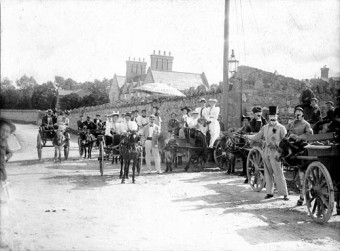
The ‘Night of The Big Wind’ on the night of January 6/7, 1839, deprived thousands of people in the Galway area of their homes. Their situation in the depths of winter was more than local charities could cope with. On May 8, the Galway Union was proclaimed to include the city and surrounding townlands to a radius of roughly 10 miles plus the Aran Islands, all of which would be served by a single workhouse in Galway. The first meeting of the Galway Board of Guardians was held in the Courthouse on July 3 of that year.
Read more ...The Garra Glas in the Claddagh
Thu, Feb 10, 2011
The Garra Glas (The green field or green garden) was an area of the Claddagh which corresponds to where the Fire Station is today. Our photograph was taken in the 1930s when things were changing in the area .. the old Claddagh houses were being gradually knocked down to make way for those that are there today. Kerbstones were being laid down to frame the newly laid road surface. The house we see on the left belonged to the Flaherty family. The building next to it was obviously converted from a cottage into a workshop of some kind with the large beam supporting the double doors. Next door was Cubbards. You can see someone peeping out the door.
The gap between it and the next house led down to Raftery's Woollen Mills, which was probably the only manufacturing business in the Claddagh. There were spinners and woollen carders who made black mourning shawls among other things.
Read more ...Executions in Galway Gaol
Thu, Feb 03, 2011
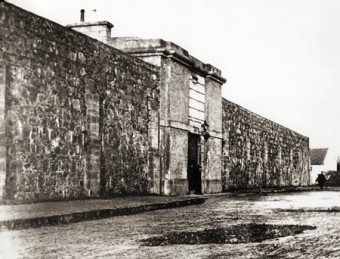
This photograph of the main entrance to Galway Gaol (facing the Salmon Weir Bridge) was taken in 1903. It was an imposing and intimidating building. The execution chamber was just over the main gate, and many prisoners perished there.
Read more ...Memories of the Hangar
Thu, Jan 27, 2011
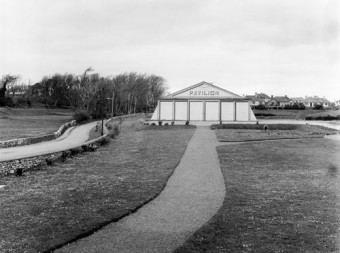
What we know as Salthill Park was originally a large field with a small lake. It was landscaped in 1907. In 1925 the Salthill Development Organisation (SDO) asked the corporation to clean up a cesspool there, but that took some years. In 1924, three councillors, Mr Bailey, Eyre Square, Martin Cooke, and John Coogan, bought an aeroplane hangar for the urban council for £400. It had been used by the RAF in Oranmore and was re-erected it in the park. It was called the Pavilion Ballroom, but everyone knew it as ‘the Hangar’.
Read more ...Woolies in Galway
Thu, Jan 20, 2011
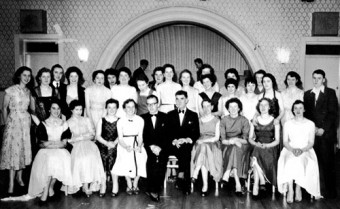
In the early 1950s the chain of shops owned by Woolworths was expanding, but it did experience some difficulty establishing a branch in Galway. It appears some councillors and retailers resisted the move, but after several failed attempts, ‘Woolies’ (as it became known), acquired the former site of the old Royal Hotel on the Square. Woolies knocked the hotel and put up a purpose built retail store. As the day of the opening approached, local interest became intense.
Read more ...Fresh herrings, scibs, and red petticoats
Thu, Jan 13, 2011
This photograph of a very animated open air fish market was taken about 100 years ago, and shows lots of creels, scibs, various types of basket, a wondrous variety of patterned shawls, petticoats, and práiscíns. There seems to be more selling than buying. It must have been very colourful and competitive… just imagine them all calling out, in lovely Galway accents, “Fresh herrings”, “Johnny Dory”, etc.
Read more ...Connacht Railway Cup team, 1947
Thu, Jan 06, 2011
In 1947 the Railway Cup crossed the Shannon for the first time. The team were all from Galway. They had beaten Leinster in the semi-final by a score of 2 – 6 to 2 – 5. The man of the match in that game was Paddy Gantley. He gave another memorable display on Easter Sunday when he lined out against Munster in the final. His name used to appear on match programmes as ‘P. Gardiner’ because he was a priest, and not supposed to play hurling.
Read more ...Raven Terrace
Thu, Dec 16, 2010
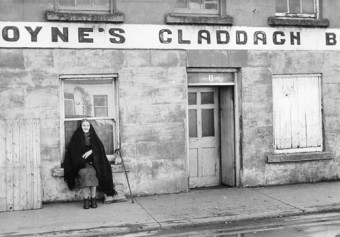
This evocative photograph of Phil Coyne’s Claddagh Bar was originally taken about 40 years ago. The shawled lady was Biddy (or ‘Bideen’) King from the Claddagh. The bar was situated on the corner of Raven Terrace, where McGuire’s shop is today. To the left of the pub was a sweet shop, which was owned by two sisters, Hanna and Sheila Gannon, one of whom wore mini-skirts long before they became fashionable. To the left of that again was John and Annie Connolly’s bar. They also kept lodgers, and one of those who stayed there was Edward McGuire who was a mechanic in Higgins’ Garage. His wife to be, Ethel Corbett, worked around the corner in George Gay’s furniture shop, and when they decided to get married, they bought Connolly’s and changed the name to McGuire’s Bar.
Read more ...Shantallow House
Thu, Dec 09, 2010
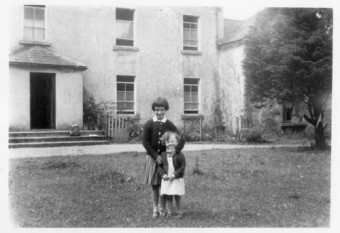
Our photograph today shows two young girls, Marie Scanlon and her sister from Shantalla, standing in front of Shantallow house in the mid 1940s. Prior to the building of the council houses we know as Shantalla, this house was more or less surrounded by green fields. At one time the house was owned by a distinguished engineer named William Blood, who was related to the Maunsell family from across the road in Fort Eyre. Blood’s nephew was George Johnson Stoney who was professor of natural philosophy in Queen’s College, Galway, from 1853 to 1857, and who lived in this house during that time. He was a distinguished amateur scientist who worked for a time as Lord Rosse’s astronomer at his large telescope in Birr. Stoney was the person who coined the name ‘electron’. He later became the secretary to the Queen’s Colleges, so he made a significant contribution.
Read more ...Forty years of Highfield Park
Thu, Dec 02, 2010
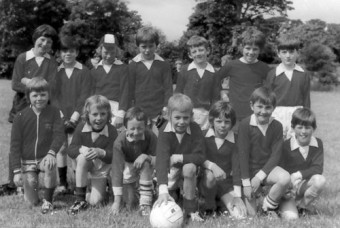
The area we know today as Highfield Park was originally a place of green fields and rocky granite outcrops and it was ‘out in the country’. There were very few people living there. Mostly situated in the townland of Rahoon (Rath Ún or Ún’s Fort), it was bordered by two of the main roads into Galway, the Taylor’s Hill road and the Rahoon road. There was a small granite quarry there, (near the grounds of St Helen’s) and a couple of stone turrets which probably served as watchtowers.
Read more ...From Galway to New York in 1952
Thu, Nov 25, 2010
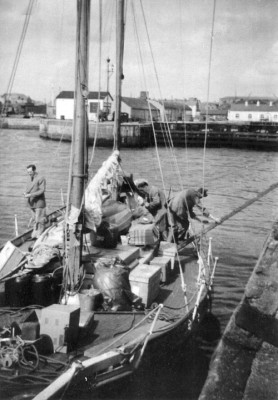
The Aisling was a rig kedge which was built in McDonagh’s Boatyard in 1946 by John McNally to a design by AA Pemberthy, who was a district engineer with the ESB. It was intended for Mediterranean cruises. Most of the vessel was of timber cut in County Galway and it also included part of the recently demolished stand at Ballybrit. John McNally unfortunately died before the boat was built, and a man called Tony Jacob from Rosslare bought the half finished vessel. He had gone to school with Fionn and Christopher Darby from Killiney, with Anthony Blyth from Athenry, and with David Webb from Nenagh.
Read more ...That strange English passion for Ireland
Thu, Nov 25, 2010
In the early years of the 20th century the Irish language increasingly was associated with poverty and backwardness. In the national school system, which was established in 1831, children had been beaten with what became known as a ‘tally stick’ if they were caught speaking Irish. Apparently every time a child was heard speaking Irish, a notch was cut on the stick, and the poor child received the same number of blows.
Far from being upset by this, many parents enthusiastically endorsed it. They felt that the future of their children depended on their ability to speak English. Understandably, Ireland experienced a steady decline in native Irish speakers*.
Read more ...Father Michael Griffin
Thu, Nov 18, 2010
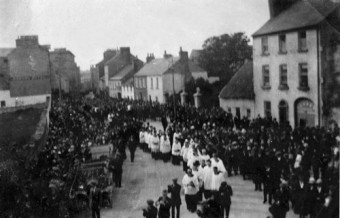
Ninety years ago this week, Galway was abuzz with the news that Fr Griffin, a junior curate for the parishes of Bushy Park and Barna, apparently responding to a sick call, went out into the howling gale in the company of three men who were said to have trench coats and rubber boots, and disappeared. The suspicion was that he had been decoyed from his house. It was significant that he did not take the Blessed Sacrament with him. His housekeeper heard very loud knocking as if with the butt ends of revolvers on the front door near midnight, as did one of the neighbours. Apparently Fr Griffin opened his window, spoke briefly to the men, and then left with them shortly afterwards.
Read more ...President Kennedy in Galway
Thu, Nov 11, 2010
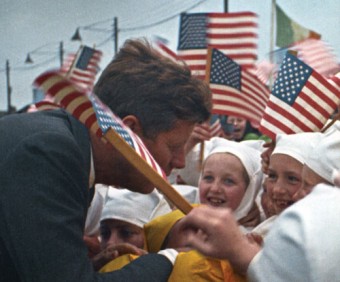
Saturday, June 29, 1963 may have been dull and overcast, but the city of Galway presented a colourful spectacle amid scenes of unprecedented enthusiasm. It was covered in Tricolours and the Stars and Stripes, in bunting and banners, in windowboxes of flowers and newly painted buildings. There was a carnival atmosphere. Some 600 gardaí were up early, lining the streets ahead of the crowds that began to arrive from 7am. There were journalists here from all over the world to cover the event.
Read more ...Watery Woodquay
Thu, Oct 28, 2010
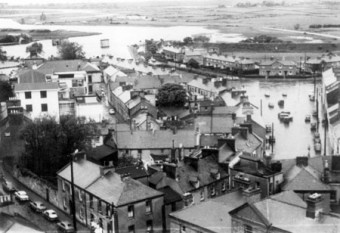
Most of the area seen in this photograph was once part of a grant of land to Edward Eyre in 1670. It was all originally outside the city walls and was mostly made up of three islands which included St Stephen’s Island and Horse Island.
Read more ...Lord Dunkellin’s statue
Thu, Oct 21, 2010
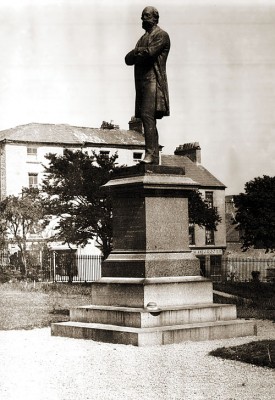
In 1873 this imposing statue was unveiled in Eyre Square in honour of Lord Dunkellin, son of Lord Clanricarde and heir to the family estates. He had a distinguished military career before being elected MP for Galway City in Parliament. He held the seat for eight years before being elected for the county in 1865. He died in 1867. There was a very large gathering in the Square on the day of the unveiling with lots of toasts and speeches. The sculpture was a very fine one by the distinguished artist John Henry Foley.
Read more ...The Order of Malta in Galway
Thu, Oct 14, 2010
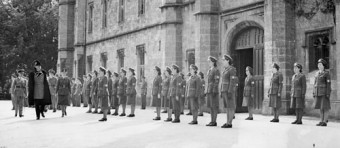
The Order of Malta was founded in the 12th century in Jerusalem to care for Christian pilgrims in the Holy Land and along pilgrimage routes through Christian Europe. Subsequently they were known as the Knights Hospitallers and when they came to Ireland they maintained hospitals for the sick, the poor, and the needy, and hostels for the use of travellers. The order is involved in many charitable activities, the most important being the administration of the Order of Malta Ambulance Corps.
Read more ...College House, a brief history
Thu, Oct 07, 2010
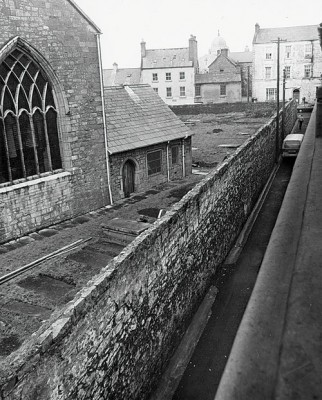
This photograph was originally taken in 1983 as the corporation was preparing to knock down the high wall that ran around St Nicholas’ Collegiate Church and replace it with the railings that had surrounded Eyre Square… one of the better Quincentennial projects that helped improve the face of Galway.
Read more ...A Yorkshire man in Galway
Thu, Oct 07, 2010
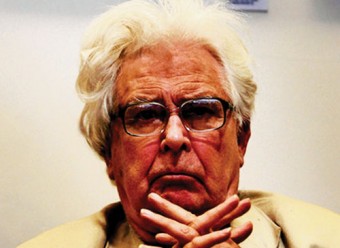
On October 22 1959 an unusual play opened at the Royal Court theatre, London; a theatre never afraid to be different. It had after all presented John Osborne’s Look Back in Anger* three years previously - a play which rocked the establishment, and transformed English drama for ever. The critics adored it, it played to full houses every night, and it made lots of money for everyone concerned.
Read more ...