Galway’s military museum
Thu, Aug 18, 2011
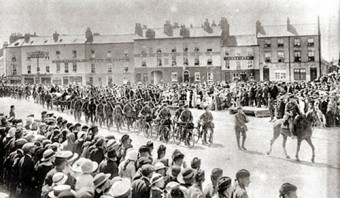
Our photograph today was taken in Eyre Square in 1922, and shows the Connaught Rangers parading through the city on their last day in Galway. It is interesting to see them on horseback, on foot, and with bicycles. As you can see in the foreground, there is a long line of soldiers standing in front of the crowd, and there is what looks like a temporary reviewing stand on the far side of the street.
Read more ...One hundred years of cinema in Galway
Thu, Aug 04, 2011
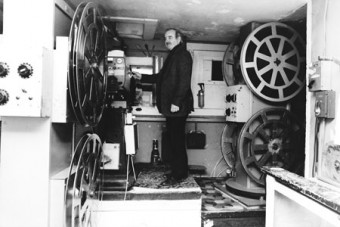
The earliest reference to ‘moving pictures’ in Galway that I have come across dates from 1909, when The Enterprise Animated Picture Company came to the Court Theatre in Middle Street with its cinematography performances and variety entertainments. “Rarely has such an opportunity been given to the people of Galway of viewing in animated pictures the most sensational events of real life and drama. Those from real life included Boxing Champions and Logging in Sweden, while other titles included Nocturnal Thieves, A Constable Please, The Pony Express, and Fairy Presents. The pictures come in ever-changing variety and there are no exasperating delays.” The Court Theatre had 500 seats and was also known as The Racquet Court.
Read more ...The huckster’s harvest
Thu, Jul 28, 2011
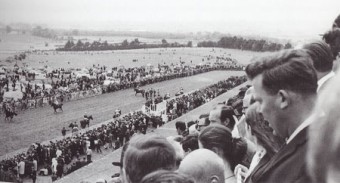
“The Galway Races are unique in Irish sport. For this is a real Connaught holiday. Caravans and their picturesque owners are making their trek weeks ahead. Urgent farm work is abandoned for an hour. Business and professional men; regular race-goers, hunting folk, farmers of all ranges of acreage, holiday trippers from the eastern cities; Connemara and Aran Island men and maids who speak English only, are here in colourful buoyant groups. All the fun of the fair; huge fields of beautiful horses; thrilling finishes and good priced winners — all lend glamour and life to this great outdoor festival of the west.
Read more ...Postin’, the Races, and the famous Cannon Ball
Thu, Jul 28, 2011
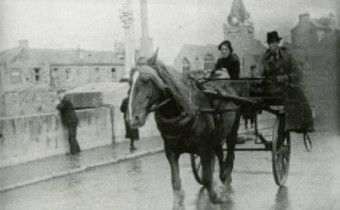
I have often heard my grandmother say that the fun of Galway races began when you were hauled up onto a sidecar, behind a lively pony, and driven at a smart pace to Ballybrit. Passengers held on tightly to each other, or to the wooden seat, as the smell of horse, and the jolting ride over rough roads gave it a carnival atmosphere. The races were a two-day meeting then yet the jarvies, or ponymen, would hang about the town for the week hoping to get a fare. As well as bringing racegoers to Ballybrit in the mornings, and home in the evenings, they also brought them to Salthill. Sometimes they carried them to the dogtrack at College Road. Either way it was a long and busy week for the ponymen who came mainly from the Moycullen area, renowned for its Connemara ponies, and passionate owners.
Read more ...Bowling Green of yesteryear
Thu, Jul 14, 2011
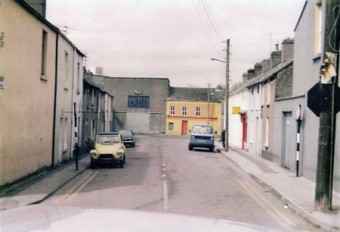
In 1883, a sub-committee of the town commissioners reported on the sanitary conditions of the houses in this area. Some were occupied in tenements, others were held by single families. “In none of these houses is there any provision as to water closets, privies or drains which in itself is deplorable; but your committee feel it would be but ill discharging their duty if they stopped short at such an exposition and remain silent as to the absence of every feature which would recommend them as habitations for human beings. The poor can only hope for impoverished dwellings, but when a gentleman enters into commercial relations with them, and on a well intended profitable scale to himself .... he should not be exempted from the obligation of providing them with accommodation somewhat better than Indian wigwams.”
Read more ...Changing fashions, Eyre Square
Thu, Jul 07, 2011
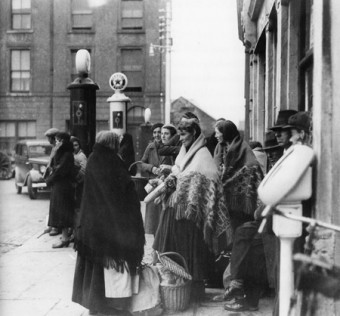
There is a wonderful mix of the modern and the traditional in this photograph which was taken at the corner of Eyre Square and Rosemary Avenue in the mid 1930s. The woman in the foreground is wearing a plain black shawl, a petticoat and a ‘práiscín’ which was a heavy canvas apron worn to protect the skirt. Two others are wearing beautifully patterned shawls which must have looked very elegant and colourful. They had probably come into town to sell their wares, and then went shopping with the proceeds, and their baskets are now full. The other women in the picture are all dressed in more ‘up to date’ coats and berets. It looks as if all of these people are waiting for a bus.
Read more ...Attempts made in 1847 to establish fishing industry in the west
Thu, Jul 07, 2011
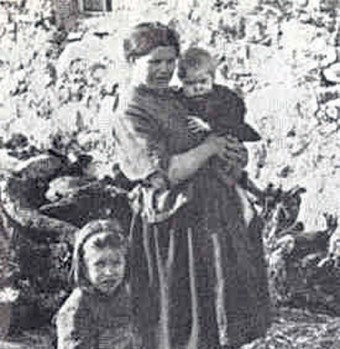
The tragedy of the Great Famine was compounded by the fact that our seas were full of fish, yet the lack of a sustainable fishing industry, and a general dislike of fish among the peasantry, left untouched this abundant food source. As the appalling statistics of hunger, riots, death, fever and evictions began to penetrate the British government, some action was at last taken*. Unsuitable as it was for Irish palates, vast quantities of American maize was imported, and distributed. Public relief schemes, such as canal-building and new roads were introduced to provide some employment, and efforts were made to establish a fishing industry.
Read more ...Pádraic Ó Conaire, prince of storytellers
Thu, Jun 30, 2011
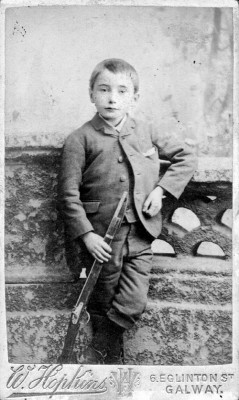
“A short walk on the gravelled path and I was before the man I had come to see. There was a great peace about him as he sat there, leg crossed upon leg, hat rakish on his head, mute in the sculptured dignity of stone. Ever since I had learned the Gaelic, I had loved him, this strange man of dreams whose friends were the birds and the furry people of the wood, the wind and the small white stars.
Read more ...Our Lady’s Boys’ Club, a Galway gem
Thu, Jun 23, 2011
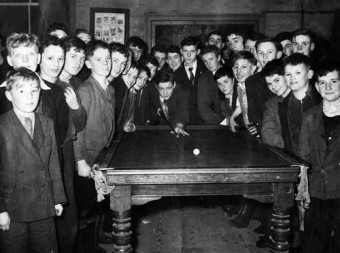
This photo of a happy group of Boys Club lads was taken in the mid fifties and includes Paddy O’Connell, Dominick Curran, Seanie Flaherty, Joe Walsh, --- Harty, Tommy Gannon, Dessy Fitzpatrick, Michael Burke, Tom Cunningham, Bartley Hynes, Tony Conboy (taking the shot), Sean McNamara, Gerry Ryan, Willie Golding, Colie Rushe, William McDonagh, Peter Folan, Leo Creane, Francis Walsh, Danny Collins, Jackie Molloy, Dominick Geary, and Paddy McDonagh.
Read more ...The Great Famine in Galway
Thu, Jun 16, 2011
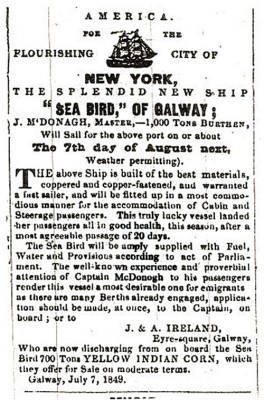
Like most towns in Ireland, Galway was used to food shortages; they had occurred here in 1816, 1817, 1822, 1831, and in 1842 there were food riots in the city. Nobody, however, was prepared for what happened in 1845 when the potato crop failed. As winter approached, the situation did not seem any worse than usual, though people were concerned about food being exported from the docks while there was a shortage locally.
Read more ...Galway minors, All Ireland champions 1970
Thu, Jun 09, 2011
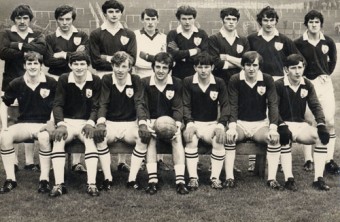
Now that Alan Mulholland’s under-21 team have kickstarted the Galway GAA season in such spectacular fashion, we thought to show you some champions of yesteryear, the county minor team who won the All Ireland in 1970.
Read more ...Merchants Road, after the fire
Thu, May 26, 2011
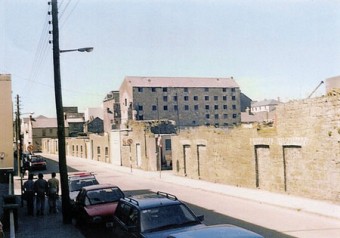
This photograph was taken in the late seventies, and shows how quickly streetscapes can change. Merchants Road was originally known as ‘Back Street’ because it was at the back of (outside) the old city walls. As the docks were developed, a lot of warehousing and industrial buildings were constructed around the area to facilitate companies who were importing and exporting from the port, and so Merchants Road came into being. It was a drab street, quite a bit of the area we see in the foreground was warehousing, like the tall building we see in the centre of our picture.
Read more ...Galway Textile Printers
Thu, May 12, 2011
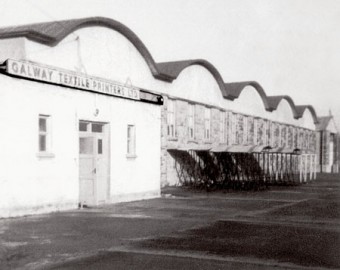
Our photograph today, which is courtesy of Pat McPhilbin from Emmett Avenue in Mervue, shows a large factory building which was constructed by Sisk’s (with Jack Lillis in charge) on a site on Sandy Road in the early fifties. It was to house an industry called Galway Textile Printers which was known locally as ‘The Cotton Factory’, and even more colloquially as ‘The Cotton’. There already was a hat factory and a china factory here, but GTP was the first major industry to come to Galway and quickly became one of the biggest employers in the west of Ireland. Some of those who worked there were specialists who were brought in to help set the factory up, but most employees were local.
Read more ...Calling all Salerno past pupils
Thu, May 05, 2011
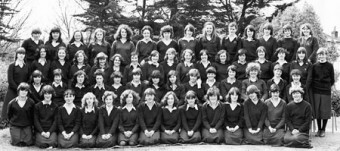
Bishop Browne invited the Sisters of Jesus and Mary to open a national school in Salthill, and on May 1 1952 Scoil Íde opened in what used to be a small hotel called Dalysfort House, with 43 pupils and three teachers. The numbers grew rapidly, so it was decided to knock the old hotel and build a new school. This was officially opened by the minister for education, Dr Patrick Hillery, in 1962.
Read more ...Currach racing in Salthill in the 1950s
Thu, Apr 28, 2011
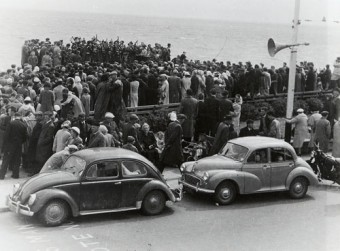
In the early 1950s a group of people got together to come up with ideas for extending the tourist season. They decided to focus on traditional Irish cultural events throughout the country, often with a local flavour, and they called the project An Tóstal. A committee was set up in Galway and they came up with the concept of an All-Ireland Currach Racing Championships. Nothing like this had ever been done before, so it took quite a bit of organisation.
Read more ...The men who first brought Sam to Galway
Thu, Apr 14, 2011
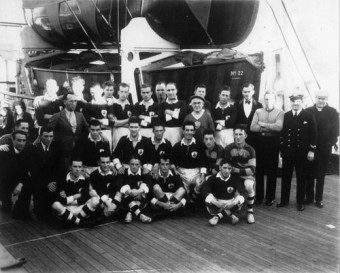
Galway reached the All-Ireland football final for the first time in 1919, when they were beaten by Kildare by 2 – 5 to 0 – 1. In 1922 they were beaten by Dublin by 6 points to 4. In 1925 they won it for the first time, beating Cavan by 3 – 2 to 1 - 2. In 1928, the Sam Maguire Trophy was presented to the GAA, and ever since, it has been the dream of every county in Ireland to hold it aloft in Croke Park on the third Sunday in September.
Read more ...Thanks for the memories
Thu, Mar 31, 2011
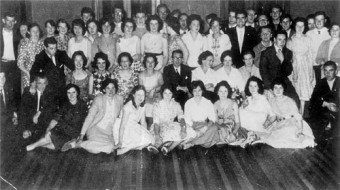
Seapoint Ballroom was officially opened at 10pm on July 17 1949 by Joe Costelloe, Mayor of Galway. Noel Finan bought the site from Jim and Mary Cremin, who were brother and sister. They ran a famous seawater baths there, a kind of health spa of its day. At the time Salthill was a small village with a few hotels, B&Bs, and shops. It also had the Hangar which was run by John Allen, but it closed down in Race Week when dancing moved into a marquee in Eyre Square. At the time it was 1s 6d into the Hangar for women and 1s 9d for men.
Read more ...A relic of old world charm
Thu, Mar 24, 2011
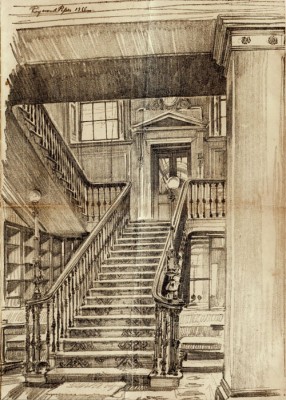
Our image today is of an original drawing done in 1958 by Belfast artist Raymond Piper (now deceased) of the beautiful staircase in the Great Southern Hotel. When one entered the hotel, the reception desk was to the left, there was a small corridor leading to the dining room on the left, and another leading to the bar on the right. Just past these was a comfortable lounge area, and at the end of this was this magnificent staircase leading to reception rooms upstairs, and directly to the station platform.
Read more ...Dredging the river
Wed, Mar 16, 2011
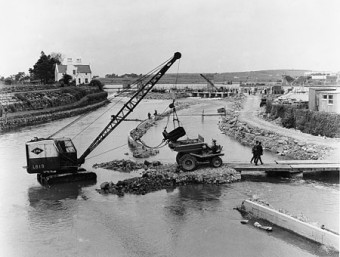
Alexander Nimmo made a survey of Lough Corrib almost 200 years ago in which he wrote the following: “The lake has 50 miles of shore, occupies 30,000 Irish acres and contains 1,000 acres of arable land in its isles, and contracts into a very spacious river about two and a half miles above Galway, which, flowing by the town, communicated with the Atlantic. The fall from the summit lake to the sea is considerable, but to the Wood Quay, above the town, it is trifling, and the river is in parts very shallow, running over a bed of rocks and hard gravel. It is not navigable from the sea to the Wood Quay, owing to the shallowness and rapidity of the water, and none but small boats can come down; but, unless in very dry seasons, it is thence navigable by boats drawing four feet of water and carrying from ten to twenty tons, with one square sail and four men, to Cong. They seldom sail unless before the wind, and though the lake has many islets and sunken rocks, the only serious difficulty in navigation is at Buachally Shoal about four miles up the lake, and at Newcastle. These shoals could be deepened for a small sum and the whole made to admit vessels of much greater magnitude. This fine navigation which extends about 30 miles, and into a seaport town, seems to deserve more attention than it has yet received. A good chart with soundings and sailing directions, should be published, the shoals or rocks cleared or beaconed, and a communication opened with the sea.”
Read more ...Nuns Island about one hundred years ago
Thu, Mar 10, 2011
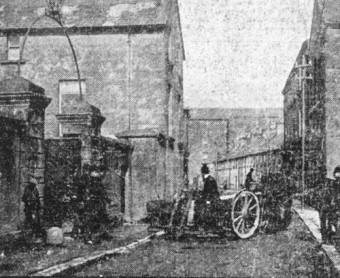
In the 19th century Nuns Island was part of the industrial heartland of Galway. The 1911 census tells us that the street comprised two lodging houses, Grace’s Asylum, the Presbyterian Church, a ladies’ school, a fever hospital, Her Majesty’s Prison, a brewery and malt house, St Joseph’s Seminary, two flour mills, a granite works, and the Poor Clares Convent as well as the various residences.
Read more ...