Bowling Green
Thu, Mar 04, 2021
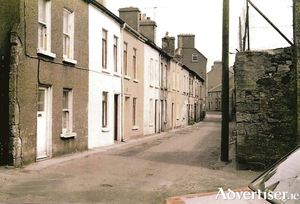
Bowling Green first appears without a name on a map in 1608. It features a little later as Bóthar Alasandair or Alexander’s Lane (eventually shortened to Sander’s Lane) which in turn was named after Alexander’s Tower, a medieval tower nearby. It is difficult to know exactly when the name Bowling Green originated, but we must presume there was a bowling green in the area at some point. On an Ordnance Survey map of 1839, the part of Bowling Green we see in our photograph was known as ‘Bowling Green Lane’ while the section connecting with Lombard Street was known as ‘The Bow’. Both sections are collectively known as Bowling Green today.
Read more ...A view from the rear of the Spanish Arch
Thu, Feb 25, 2021
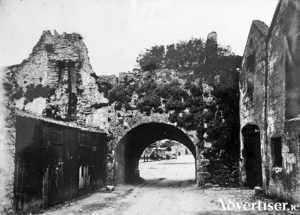
The Spanish Arch was not part of the original city walls but was built in 1584 as a measure to protect the city’s quays. It was originally known as Ceann an Bhalla or The Head of the Wall, a fortification that extended from Martin’s Tower to the river. Then in the 18th century, the Eyre family built Long Walk as an extension of the quays and a breakwater to construct a mud berth. A number of arches were constructed to allow access from the town to the new quay but unfortunately, an earthquake that occurred in Lisbon in 1755 resulted in a tsunami that destroyed some of these arches. In olden times, ships would have moored here unloading their cargo of Spanish wines and foodstuffs such as olive oil, spices, tea, coffee, and cocoa. Later, these ships would have been replaced by Aran fishing boats unloading and selling their wares.
Read more ...'If one policeman is shot here up goes the town'
Thu, Feb 18, 2021
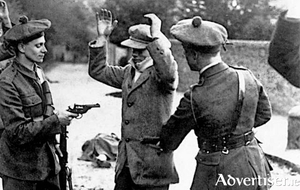
By early 1921 Britain’s war in Ireland was not just a moral issue, but a financial one. The sheer expense of solving 'The Irish Question', considering financial reparation for the loss of civilian life and destruction of private property, along with the price tag of the Crown Forces’ operations in Ireland, was staggering.
Read more ...Danno, the quintessential Galwegian
Thu, Feb 18, 2021
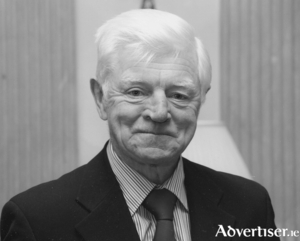
He was one of those people who was known to all by just the one name, Danno, and that was not even his actual name. He was born Francis Brendan Heaslip in Knocknacarra in 1938. Because he looked very like a boxing champion of the times, Danno O’Mahoney, he was given the nickname and it stuck. He was one of six siblings born to Joe Heaslip from Cork and Maureen O’Donoghue from Tuam; Minnie, Jimmy, Michael, Danno, Helen, and Phil. They lived in Lenaboy Gardens in Salthill,.
Read more ...Galway Hockey Club, the first seventy years
Thu, Feb 11, 2021
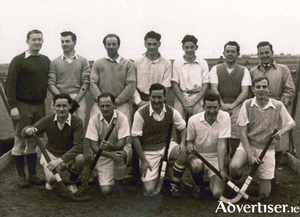
In 1951 Hastings Elliott Jephson was working in the ESB in Galway when he had the idea of setting up a hockey club in the city. He and his friend George Bevis decided to see if there was merit in this notion, so they simply went from door to door around town asking people if they would have any interest in playing the game of hockey.
Read more ...Death by wrongful humiliation - the story of Valentine Steinberger
Thu, Feb 04, 2021
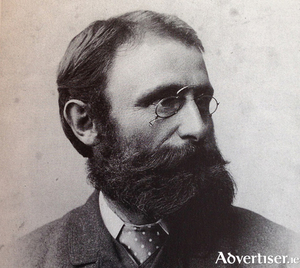
STEPHANIE KLAPP, MA Culture and Colonialism NUI Galway, history teacher, and local historian, recalls the story of a fellow German who made Galway his home, but found himself caught up in the 1916 Rising and wrongly humiliated on the streets of Galway.
Read more ...Dónall Mac Amhlaigh, gentleman, writer, exile
Thu, Feb 04, 2021
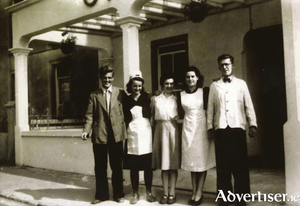
This photograph of some of the staff of the Rockville Hotel was taken in the summer of 1947. They were all well-dressed which would have been normal in hotels in Salthill at the time, porters would have worn swallow-tail coats and waitresses proper uniforms. The Rockville was originally a guest house owned by a Mr Kelleher who was a member of the RIC. It evolved into a small comfortable hotel owned by O’Neills (“Private bathing from the Hotel, Phone Salthill 70”) and later by people named Hynes. As the Rockville it had high standards and was fully licensed.
Read more ...The Galway sword and mace
Thu, Jan 28, 2021
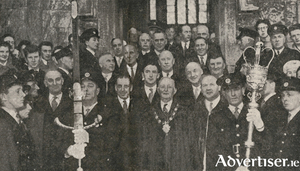
The Galway civic sword and mace are among the finest specimens of municipal corporation insignia in Ireland; the sword is particularly noteworthy and can be compared with the best of civic swords in these islands. Swords and maces were first carried by the king’s servants as symbols of the authority of the king himself. As time went on, the mayors and bailiffs of towns acquired swords and maces of their own, some following charter grants, others by mere assumption without specific authority. These were usually borne before the dignitaries concerned when they went in procession or were actively displayed when they acted otherwise in their official capacity. Maces, which were originally weapons, are staves of authority. Swords symbolise the legitimate use of force.
Read more ...The university man, the Headford ambush, and the 'Day of Rage'
Thu, Jan 21, 2021
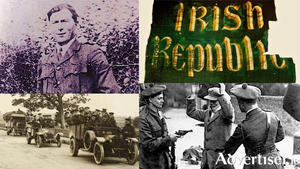
For most of December 1920, Thomas Hynes, quartermaster of the Galway IRA, was in Queen’s College Galway - today's NUIG - hiding from Crown forces, sleeping on top of bookshelves, and assisting in the making of grenades.
Read more ...The Summer-Set Hotel
Thu, Jan 21, 2021
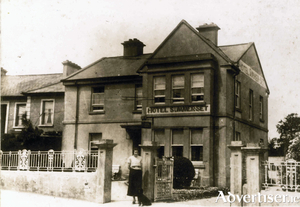
This building on Kingshill in Salthill was originally a guest house known as St Columba’s and was run by a Mrs Delaney. In 1933, Paddy and Bridie Hussey bought it and changed the name to The Summer-Set. They renovated and decorated it and advertised it as, “Beautifully Situated on the Sea Front, Home Comforts at Moderate Charges, Excellent Catering and Efficient Service under Personal Supervision, Touring Cars on the Premises for Hire, Free Lock-up Garage, Special Terms for Winter Months, Bus to Door.” The phone number was Salthill 36.
Read more ...The art of the letter head
Thu, Jan 14, 2021
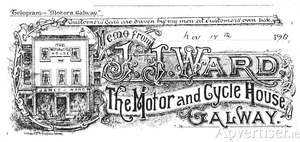
Our illustration today is of the letterhead of JJ Ward who owned The Motor and Cycle House on Eyre Square. This building is shown on the left of our illustration. It was originally occupied by Gilbeys and was next door to what is the Imperial Hotel today. James Ward set up in business here in 1903 and invited the public to ‘inspect the largest stock, the best chosen variety and the best value in Connaught in Cycles and Accessories’. In 1909 he wrote: “In my repair shop, I have the same group of hands working who have worked under me for 6 years – they know their work and do it well. I’ll give you a cycle for £7 7s as good as you can get elsewhere for a much higher price. In fact it is worth £9 9s.”
Read more ...Blake’s Castle, Quay Street
Thu, Jan 07, 2021
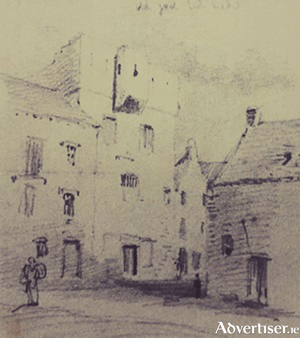
This drawing of Blake’s Castle was done in 1847 by George Victor Du Noyer, a Dublin born artist, geologist, and antiquarian who spent much of his life recording natural features and archeological sites around the country in the 19th century.
Read more ...The Holland influence in Galway
Wed, Dec 23, 2020
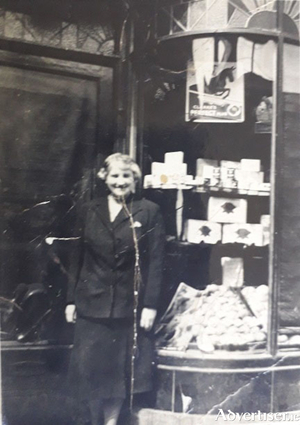
In the year 1900, Patrick Holland had a travelling shop near Athenry. He later opened a shop there and is credited with having the first car in the town. In 1914 he met Dorinda Egan and it was love at first sight. They married and had five children Brendan, Michael, Maureen, Angela and John. They eventually moved to Galway in 1930, and tried to set up a business in Dominick St. but the bank would not give them the money. They eventually managed to buy the premises of Mary Leahy’s Newsagency in Williamsgate Street.
Read more ...The British raid on Inis Mór, December 1920
Thu, Dec 17, 2020
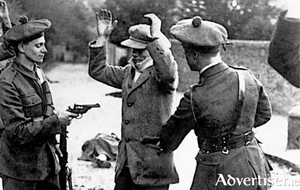
November 1920 was a bloody month in Galway with the killing of Eileen Quinn, Fr Michael Griffin, Michael Moran, and Harry and Patrick Loughnane. D Company Auxiliaries had made their presence felt.
Read more ...An Bearna
Thu, Dec 17, 2020
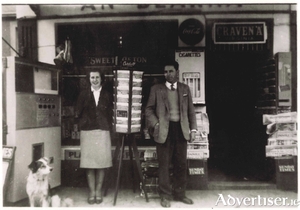
In 1928, Galway Urban Council prosecuted a Mr James McHugh from Bohermore for failing to comply with a notice requiring him to remove his butcher’s stall at Kingshill, Salthill, on the grounds that he had built it without authority, beyond the alignment of the adjacent houses. In fact, Mr McHugh had already sent the council a letter requesting permission to build the stall but those on the council were not yet aware of their powers at the time, and their solicitors had advised them that they, the council, did not have any control over the erection of such structures. Though they did not approve of the stall, they had failed to notify Mr McHugh. The case went in and out of court but the stall stayed where it was.
Read more ...A writer comes for Christmas 1945
Thu, Dec 17, 2020
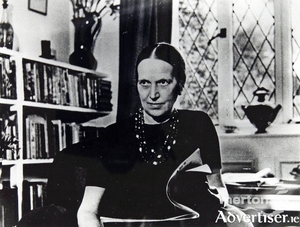
Back in Connemara for Christmas, which she insisted on calling Christ Mass, Ethel Mannin opens the door of her little cottage, located between Roundstone and Clifden, close to Mannin Bay. She has been away for some time. She lights fires in all three rooms, to drive away the musty smell and damp, and soon she is comfortable sitting by the window looking out at the sea, the mountains beyond. She was back to stay until restlessness, or some political challenge, calls her away again.
Read more ...The Galway camogie team, 1937
Thu, Dec 10, 2020
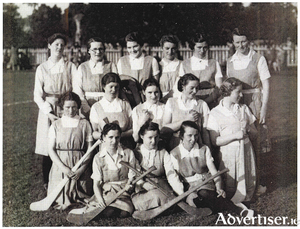
It is heart-warming to see the Galway Senior Camogie Team travelling to Croke Park on Saturday to play an All-Ireland final against Kilkenny, so, to honour the team of 2020, we thought to show you the team of 1937 who, having beaten Sligo in the Connacht final, went on to beat Antrim in Killester in the semi-final of that year. The score in the game was Galway 5 – 0 to Antrim’s 3 – 3.
Read more ...100 years since Oranmore’s Joe Howley was shot
Thu, Dec 10, 2020
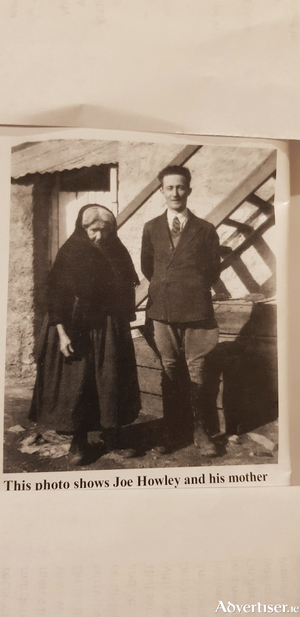
In the centre of Oranmore, stands a statue to a local man who was shot in Dublin one hundred years ago this week. Joe Howley, Officer Commanding Number One Brigade IRA Galway was killed leaving what is now Heuston Station, Dublin on December 4 1920, and was pronounced dead at 12.30 a.m. December 5 in George V Hospital Dublin.
Read more ...Joe Howley, patriot
Thu, Dec 03, 2020
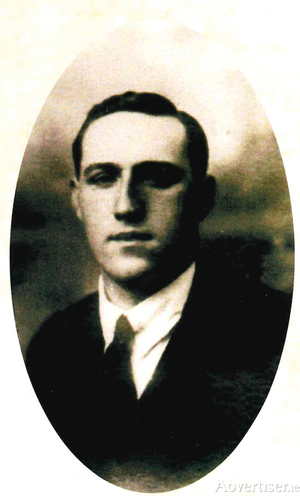
Michael Joseph Howley was born in Oranmore in 1895. His father died when Joe was just two years old. His mother was a sister of Peter Rabbitt, the proprietor of Rabbitt’s provision shop, licensed premises, and lodgings in Forster Street. She later married William Keane, the owner of Keane’s Bar in Oranmore. Joe, as he was popularly known, attended the local primary school and later went to the Bish in Galway. He obviously worked at farming as his mother once wrote, “He made a good lot with trading with cattle and sheep”.
Read more ...The Persse Windows, St Nicholas’ Collegiate Church
Thu, Nov 26, 2020
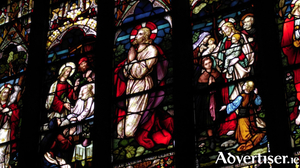
The church of St Nicholas of Myra was first built c1320, making it 700 years old this year. It is the largest medieval church in Ireland and there has been constant Christian worship there since it was built. The chancel with its three windows in the south wall dates from the beginning, the nave, and the transept date from about a century later. In 1477 Christopher Columbus is believed to have worshipped here. In 1484, the church was granted Collegiate jurisdiction by which it was to be governed by a warden and vicars who would be appointed by the mayor and burghers of the town.
Read more ...