One hundred and twenty five years ago this month, at a meeting in the Royal Hotel, a new and rather exclusive club was formed bearing the title ‘The Galway Lawn Tennis and Croquet Club’. Initially, it was proposed that they play tennis at Glenarde (where the Ardilaun Hotel is today ) but that their stated intention was to acquire land specifically to lay it down for proper tennis and croquet.
Membership was by invitation only and the majority of the 90 early members were either from the military or the landed gentry. Most of their meetings took place in the County Club. In 1901, William Persse agreed to lease a field on his property to the club for £15 per year. The firm of T. Smith of Newry was appointed to oversee the building and layout of the new clubhouse pavilion and grounds. The club was officially opened on June 19, 1901. There was an entry fee of five shillings to each tournament which would have been much too rich for most of the population. The club played their first away tennis match on August 9 of that year against Oughterard LTC.
In the early days, they struggled to maintain the clubhouse and grounds so they often leased out the complex for three days at a time. The British Legion used to organise a special day to which people would arrive on coaches and horses and the Industrial School Band regularly played for the attendance. Martin Fallon and his father before him were caretakers. The courts were rolled by a large roller which was pulled by a donkey who had to have special shoes fitted so that it did not destroy the playing surface.
Things slowed down a little during the First World War, but they ground to a halt completely in the summer of 1920 when the pavilion was burnt to the ground and the six courts were dug up as were the croquet ground and the clock golf pitch. All of the nets and equipment, even the seats flanking the courts were thrown on the flames. They were awarded £1,000 in compensation but it was a sad ending to the second decade of the club.
The pavilion was rebuilt after the attack but the club gradually went into decline. During World War II no tennis balls were available and debts began to mount. A team spearheaded by Terry McCarthy, Pearl Walsh and Walter Walsh started a revival, debts were cleared and the first real evidence of change was the extension built on to the clubhouse in 1949. A trench had to be dug to bring in water and electricity. To save money, it was club members who did the digging. Before that, water was drawn from a well on the site.
Our photograph shows one of the club teams from 1954 – the junior team that played a match against Swinford. They are, standing, Michael John Curran, Derry Kelly, Dick O’Connor, Mickey Walsh (known as ‘Little Sport’ ), Ita Kermode and selector Walter Walsh. In front are Tina Lyons, Tess Browne and Ita Mulhall.
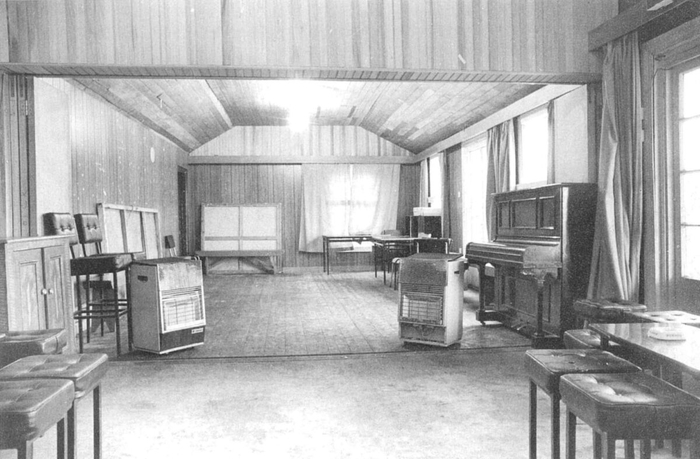
The committee began to organise dances in the clubhouse as fundraisers and many non-club members will recognise the photograph of the old clubhouse as the venue for weekend teenage hops in the late 50’s and early 60’s. If we had it, some would also recognise an image of the back toilet window where you did not have to pay to get into those hops.
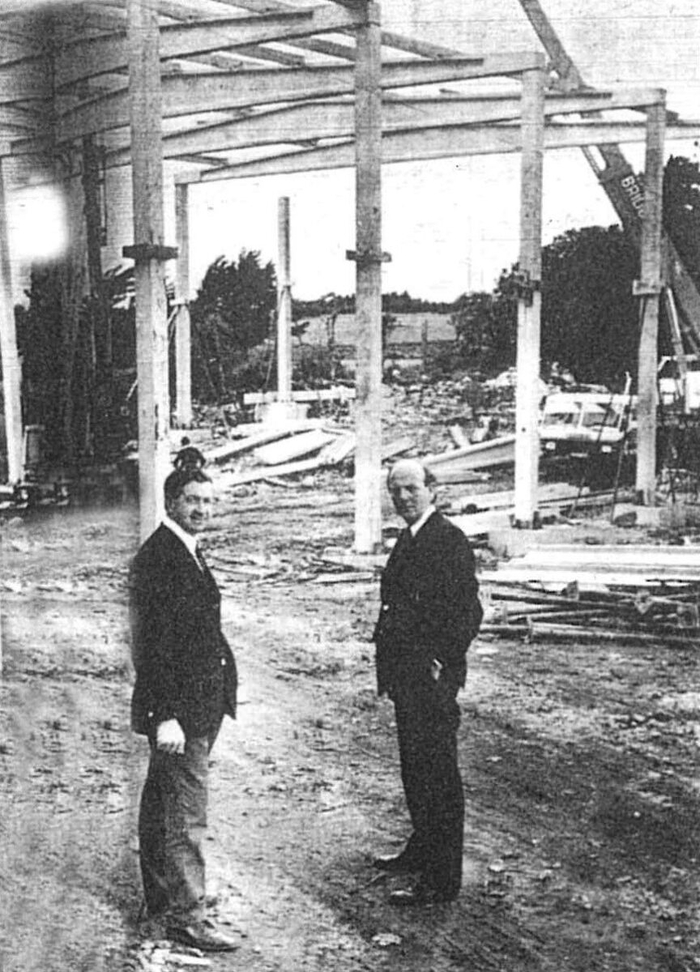
In 1965, three hard courts were developed which meant the game here was not so weather dependent. In 1973, construction began on a new building to house badminton and squash courts as you can see from our third photograph which shows Donal Dempsey and Mickey Walsh overseeing progress. This work was delayed on a few occasions by massive storm damage. Finally, on September 26, 1976, the new complex opened.
But they were not finished yet. This enterprising club drew up plans in 1979 to build four new squash courts to add to its two squash courts, two badminton courts and nine tennis hardcourts. This development would bring the membership to 1,100. In 1980, the old clubhouse was demolished to make way for the new extension. In 1990, the original two-court badminton hall became a five-court building.
Today, this racket complex has nine tennis courts, five outdoor and four sheltered from the elements by their state of the art sports dome, in spite of the efforts of storm Isha and storm Éowyn. There are six international level squash courts and seven dedicated badminton courts as well as table tennis and snooker facilities. It is a massive tribute to the vision and hard work of the founders and of the efficient committees down through the years.
All of the above is taken from the excellent Galway Lawn Tennis Club, A History written by Peadar O’Dowd which was published in 2005.