In December 1923, the committee of Galway Golf club, then based at Barna, decided to explore the idea of acquiring the late Col O’Hara’s estate at Blackrock and on April 24, 1924, they bought the West Lodge and the land at Pollnarooma for £4,750 plus £237 auctioneer’s fees. Messrs Tighe, Kennedy, Lenihan and Quinlan were appointed to oversee the laying out of the new course and the renovation of West Lodge which had been Col O’Hara’s house.
The course was designed by Messrs Colt and Alison of Berkshire. Dr Alister McKenzie, a golf architect, visited and outlined with stakes the position of the tees and greens. “He was a genius and must have had a sense of humour to make a plan for 14 holes above the road, a plan that has never been improved on”. Among his other masterpieces of design is the course at Augusta National. The area was a wilderness of scrub, bog, gorse and rocks and the construction of the course took four years to complete as the men depended on the donkey and cart, pick and shovel. It took a lot of money to develop the course into one of the finest in the west of Ireland.
The bank refused to give them an overdraft and so they sold some of their land at Pollnarooma and also some near West Lodge to avoid bankruptcy. The annual “Citizen’s Bazaar” at Eyre Square handed over the proceeds of the 1925 event to the Golf Club and a drama group made up mostly of O’Malleys and Ó’Beirns handed over the profits from their production of An Dochtúir in the Town Hall.
The club formally opened on January 1, 1925. They made every effort to attract new members and abolished the entrance fee to encourage “all classes” of people to join. The first nine holes were ready for play in April 1925. At the time some farmers from Rahoon who owned seaweed rights had a right of way through the course down to the shore. The club also had problems with trespassers, especially ‘excursionists’ along the seashore during the summer months.
In the 1930s, the membership increased with an average of 60 new members joining annually. In 1941, they had to erect tall poles to prevent the German Luftwaffe from landing on the fairways. With the rationing of petrol during the war, there were a number of resignations as people found cycling to the club too much. Many people will remember James Tierney who was the club secretary, Christy St George who was the caddy-master and Bob Wallace, the club professional, an exceptionally patient teacher when giving golf lessons.
In 1953, the widening of the Kingston road necessitated the changing of four holes on the back nine. In 1959, they decided to discontinue the grazing of sheep on the course as they were damaging the greens.
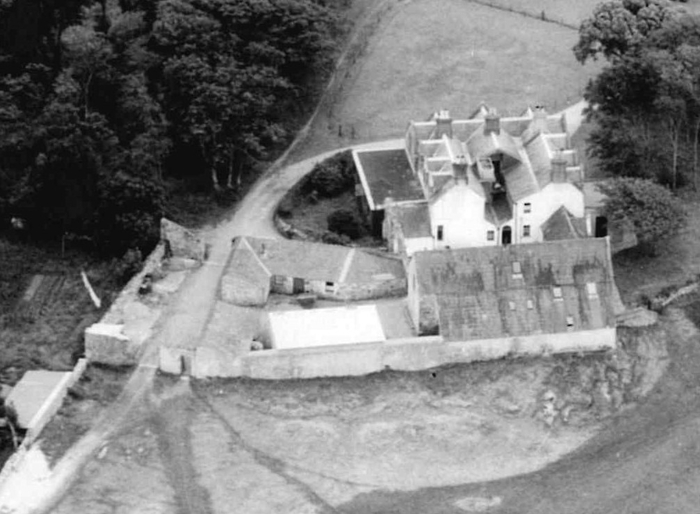
It was decided that too much money was being wasted on haphazard building repairs and alterations to the clubhouse and so architectural plans were drawn up for a new building. The membership had increased to 882 in 1975 and the clubhouse was incapable of catering for the large numbers who attended presentation nights and so work began on a major extension which formally opened on October 4, 1980. In 1993 they had to redesign the first four holes as balls going out of bounds on the first and fourth holes had become a danger to the ever increasing volume of traffic.
There is the remains of a children’s burial-ground - Kilnapastia – at the seashore, a rectangular area of 10 metres by 7 metres on which the first edition of the Ordnance map records a small building, possibly the site of a chapel. It was a common practice to choose such sites as cilleens for the burial of unbaptised children and strangers.
All of the above has been taken from Mícheál Sweeney’s history, Galway Golf Club, 1895-1995.
Our first photograph shows a group of golfers taken outside the clubhouse in 1935. They are, at the back, from the left: JF Costelloe, J Tierney, Henry St John Blake, J O’Sullivan, F Lenihan, JP Moran, D Quinlan, WR Webster, PM Kavanagh, JP Casey, HP Whelan, ET Ellwood, MF Conroy, M Whelan, Dr DV Morris. In front are Dr T Walsh, Dr CC O’Malley, Dr G O’Beirne, MB Tighe, Commandant L Walsh, RB Kineen, G Lougheed, JJ Ward, TJW Kenny and EF Fitzpatrick`.
Our second image is of an aerial photograph of the clubhouse taken in 1954 and is courtesy of the National Library.