UNIFIL, the United Nations’ Interim Force in Lebanon, will finish next year, after the US vetoed its renewal in August.
The genocidal onslaught in Gaza may well be cooling thanks to the bullying urgency of Donald Trump’s negotiations, but the heat is being turned up in Lebanon, as the UN prepares to withdraw its 10,800 military personnel after December, 2026.
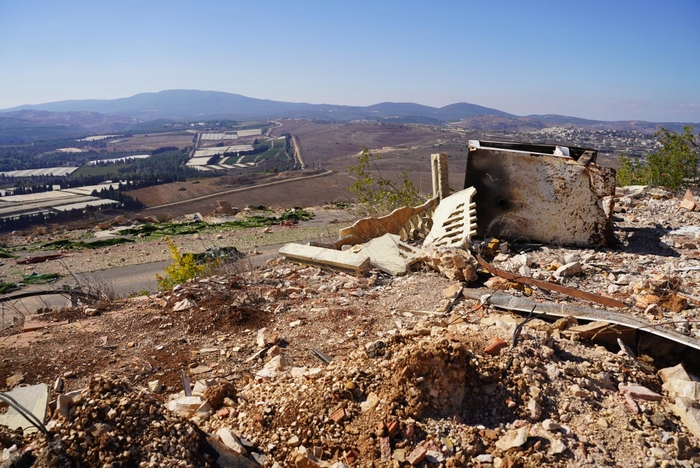
Since October last year, Amnesty International has reported more than 10,000 civilian structures destroyed by Israeli airstrikes in Lebanon, and untold acres of farmland in this verdant country, ruined.
More destruction wrought between May and June this year during the current Galwegian deployment, which began in April, means southern Lebanon is only now re-populating after 80,000 fled, but during the Advertiser’s visit last week, several airstrikes destroyed builders’ machinery being used in the reconstruction of southern communities.
This may well be a calm before a renewed storm in Lebanon, and it is difficult to articulate the resigned fear displayed by a proud, rural people of Christians, Muslims and other faiths, in a stony and rocky, yet green land, that reminds the visitor of Connemara crossed with Tuscany.
Travel to the Levant
Getting from Galway to the military zone at the Blue Line, the border with Israel, is not straightforward, but Lebanon – like Ireland – is a small country with a huge diaspora which flocks home on holiday, mainly from Canada, the US, Europe and Australia, so its main airport in Beirut is well connected.
From Beirut, on the Mediterranean coast, to the military zone south of the Litani River, which slices Lebanon in half, the Advertiser hitched a lift in an Irish Defence Forces’ convoy tasked with delivering diplomats and army brass visiting troops at their posts.
It is a straight run south, from the capital, along a three-lane coastal motorway, through the historic cities of Sidon and Tyre, which have similar populations to Galway city and county, respectively, if not counting recent refugees.
We passed through Lebanese Armed Forces’ (LAF ) checkpoints on the Litani, then cut inland through rich farmland of solid, modern detached houses. Some poverty was apparent in small villages, where Ottoman era buildings still show machinegun marks from Lebanon’s 13, often short conflicts, over the past 50 years.
Heavy flak jackets and Kevlar helmets are an uncomfortable and hot necessity in October’s 26C heat.
The current threat level from depleted militias with animosity toward the UN means jeeps and a minibus were authorised by Irish officers, rather than the bone-rattling Mowag armoured personnel carriers which carried us the final leg to UN outpost 6-25, near where Galway troops on patrol overseeing civilian tradesmen were bombed by Israeli drone-borne stun grenades, earlier this month.
No salutes at Shamrock
The Irish army’s command centre and depot is Camp Shamrock, which also houses Polish, Hungarian and Maltese soldiers attached to the Irish battalion. It is commanded by Lt Colonel Ed McDonagh, who marched his troops out of Renmore Barracks in April.
The hilltop camp is a fortress, surrounded by concrete blast walls, barbed wire and pillboxes, with several bunkers within and without. A small ‘street’ of local traders has sprung up at its entrance, and from a distance, the installation of mostly prefab buildings, sheds and “chalets” could be mistaken for a small town.
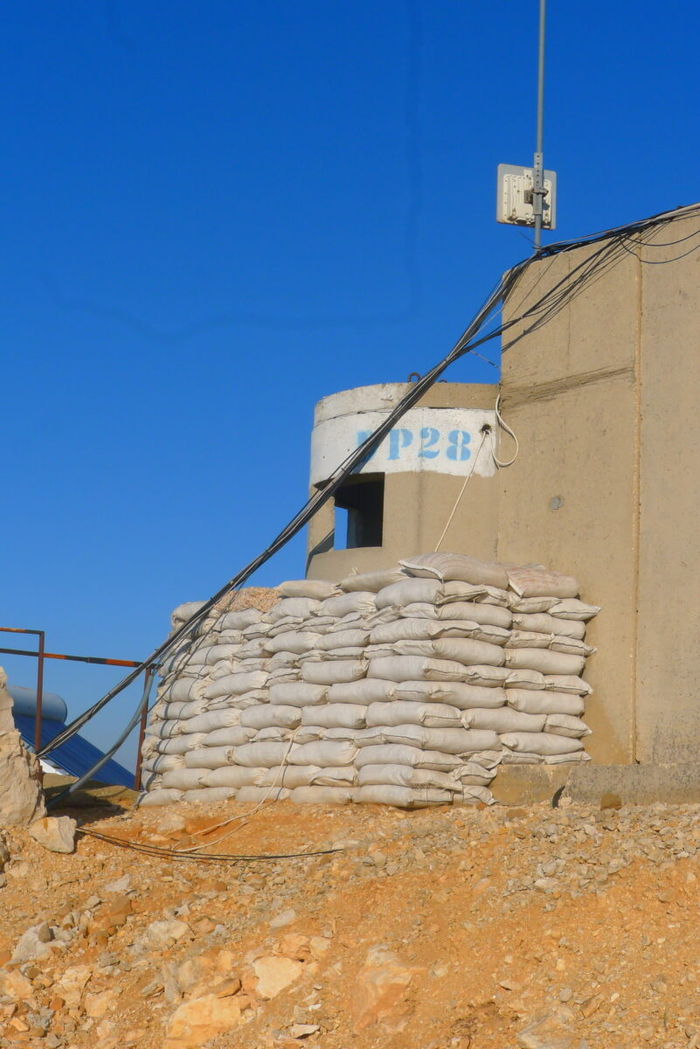
The air smells of bougainvillea blossom, carried on a hilltop breeze, which cools the heat. To the north, the snow-capped mountains of Syria are visible, and the lower ski resorts of Lebanon, usually under snow from December.
Inside the camp, hundreds of soldiers eat, sleep, exercise and work. There are offices, gym areas, vehicle hangers, a fire station, chapel, canteen, and even a small club house.
A number of basic washrooms cater for soldiers’ strictly rationed, 30-second per day showers, reputedly hoarded by female soldiers who need to wash their hair. Cats and a few dogs roam, spoiled rotten by fresh-faced, young men and women missing pets back home, but also acting as sentries against strangers.
Irish soldiers are mostly billeted in four-man rooms within prefabs, lined up to create little lanes like a holiday camp, but bunkers at each intersection reveals their military purpose. So too the medical station, armoury and command centre.
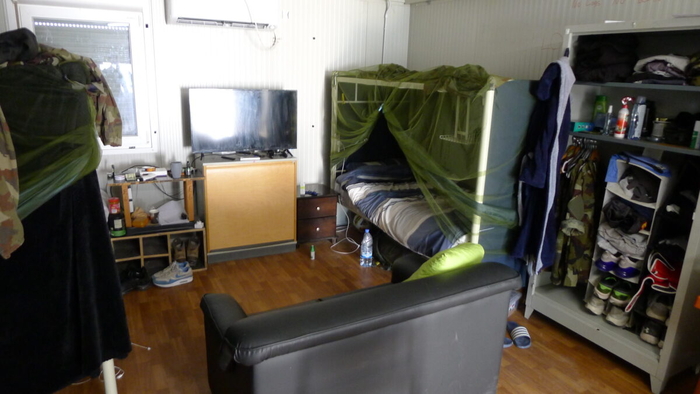
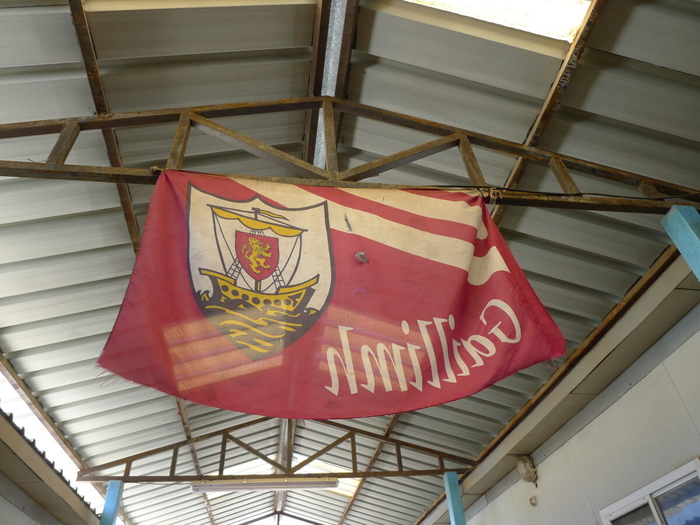
Maroon and white Galway flags currently fly in dominant positions next to unit banners. Jocks and socks hang from makeshift washing lines. Off duty, the banter is brutal.
Soldiers on deployment need not salute, so there is a breezy atmosphere of ‘hello sir’ and ‘howarya?’ compared to the more formal environment of barrack life back in Dún Úi Mhaolíosa. Everything, from paths to plates, are pristine, under the watchful eyes of senior NCOs, who deploy humour more often than discipline.
Even so, there is a constant underlying anxiety of “Groundhog!” being declared, which means immediate flight to bomb shelters as incoming fire is imminent. The crump of a mortar salvo in the distance momentarily kills conversation, as ears cock, before returning to the more pressing matters of what comrades got up to on leave recently, in Thailand, or – Lord-save-us, in Tuam. The drone of Israeli drones is near incessant.
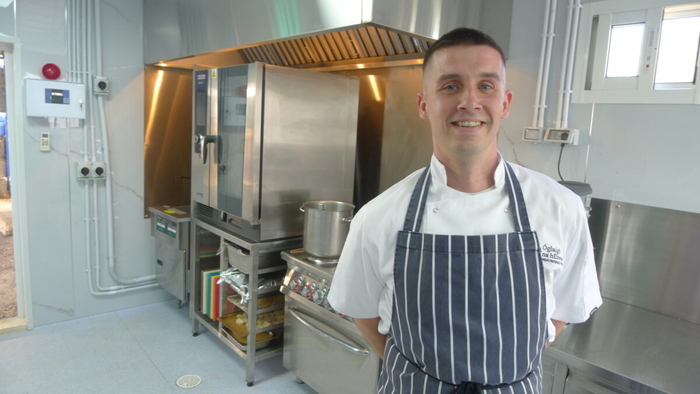
The heartbeat of the camp is the cookhouse and canteen. Polish and Irish cook-sergeants alternate. The hardworking men and women here have savage appetites, and an army really does march on its stomach.
Old sweats report the standard of grub on this deployment is “outstanding,” and tales of missions past are delineated by major military incidents, such as the near constant necessity to hunker down in bunkers during the preceding deployment of 125 Battalion, or the tenures of kitchen orderlies who did not quite cut the mustard. There is a canteen buffet for breakfast, lunch and dinner, with recognisable staples from home, served alongside Lebanese salads and desserts.
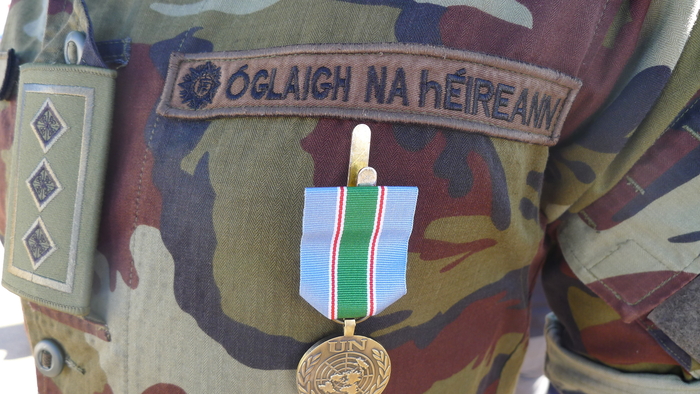
While the Advertiser visited on an overnight stay, a BBQ was organised after a medal ceremony, and soldiers from 11 different nations attended in a collage of camouflage and insignia.
The pomp and ceremony of a staff officer’s review was the invite, but some visiting Italian and Ghanaian officers did admit that leaving their UN bases to visit another was always an opportunity to share intel with international colleagues, and – of course – sample Shamrock’s renowned fayre. Irish footballers recently beat a strong Ghana Army 11, and a rematch is on the cards.
Forward Operating Bases
This is, however, no holiday for the IrishPolBatt, or the other 10,000 UN troops stationed in Lebanon, mostly tasked with monitoring the Blue Line on the de facto Israeli border.
Most Irish soldiers spend several weeks based in small, forward operating bases and outposts, such as UNP 6-52, with a large Israeli block house less than 1km in front of them. A constant level of readiness is maintained, especially since Israeli vehicles, including tanks, were deployed adjacent last October. They waged a week-long battle against Hezbollah fighters, before levelling the nearby village of Maroun al-Ras, and its famed Iranian Gardens.
As the Advertiser arrived by Armoured Personnel Carrier last Thursday, Chinese sappers detonated unexploded ordinance leftover from the battle. Despite a four-minute warning, the booms are still adrenalizing jolts. Irish binoculars nervously scanned the Israeli emplacement 800m away for reaction.
Thankfully, nothing stirred amongst rippling Lebanese fields, deliberately scorched by Israeli phosphorus rounds.
Resident fears
A local muqtar, a district mayor, pleaded with the visiting diplomats for Irish troops to remain, when visiting a nearby solar array which Irish troops helped locals to erect. The muqtar’s aide drew the Advertiser’s attention to the nearby mosque, and five homes in Kounin’s town centre, a mostly Shia community, flattened by an Israeli airstrike five months ago.
They say no arms or militants were present. A year earlier, a Hezbollah commander was assassinated in a drone strike while driving through the town.
The town’s school has still not reopened since the 2024 Israeli invasion of south Lebanon. Its mayor is trying to entice 150 families back home, and Irish soldiers had planned to resurface the damaged Astroturf soccer pitches next year, but that may not now come to pass.
“We consider you here as part of us,” said mayor Khalil El Debek, addressing visiting Irish officials.
Speaking to the Advertiser via an interpreter after the diplomatic meeting, El Debek was curious to know what people back in Galway think, especially in agricultural areas like his. “When they know the truth about what is happening here, from people like us on the ground, they will know that we are honest people. There is very little independent media reporting of what has happened here,” he said, pointing at the fresh shrapnel gashes in the walls of the modern community centre where we met.
Cynics suggest removing 10,000 UN troops from poor, south Lebanon will be a major blow to the regional economy, and they are likely correct. But the plea for specifically Irish UN troops to remain transcends that, as they have been part of daily life here for five decades.
“I have watched Irish soldiers donate blood to people in my village when injured. They have been here all my life,” says the muqtar’s young aide. The official interpreter, and many other locals, speak English with an Arabic-Irish accent. No one under 60 really remembers a time without Irish troops as part of – yet separate – to the local community. One wonders will journalists be able to safely visit in future if the blue helmets are gone?
Dismantling and evacuating Camp Shamrock next year will be a massive logistical undertaking, probably requiring heavy machinery, and perhaps two cargo ships for separate phases. There are rumours that a nearby French detachment of assault troops, which acts as UNIFIL’s rapid reaction force, will remain after the UN mandate expires, as invited guests of the Lebanese government.
Sacrifice
Some 32,000 tours of duty have been served by Irish personnel with UNIFIL. Of the 348 Defence Forces members there now, at least 72 are normally based in Galway.
The huge esteem Irish soldiers are held in by many south Lebanese people makes it likely the new government of President Joseph Khalil Aoun, himself from the southern region, may invite Ireland to assist his army assert territorial sovereignty against Israeli incursion, and disarm Hezbollah remnants.
Ireland’s triple lock mechanism means Dublin may only send 12 soldiers. Twelve. Just as China vetoed Ireland’s intention to send peacekeepers to Macedonia in 2003, the United States, lobbied by Israel, is likely to veto any new UN proposals for Lebanon. The Advertiser was too embarrassed to explain this legislative shibboleth to the Lebanese.
Of all the contributing UNIFIL nations, Ireland has lost the most troops on service in Lebanon – 47 soldiers have died here. Five of these were Defence Forces’ members based in Galway.
It is arguable that UNIFIL has been a failure since Israel’s first invasion of Lebanon, in 1978.
Three major wars have erupted between Israel and externally-backed militias in Lebanon. UN troops have perhaps failed to prevent, or fully resolve, any of them, maybe due to an abundance of caution for their own soldiers’ safety, and not having a robust enough mandate to proactively deploy force against radical Lebanese and Palestinian elements, who conspire to frustrate, with occasional riots curtailing peace keepers’ freedom of movement.
However, the counter argument is that without UNIFIL, the blue helmets would not have policed long periods of peace and prosperity in south Lebanon, evidenced by fertile farms, and a residential construction boom there.
UNIFIL has also facilitated the eyes of the world’s media, charities and other NGOs to visit a highly contested border region, and speak freely with the peaceful people who live there. Without UN troops and global political scrutiny, Lebanon could have become an eternal battle ground between myriad forces, ideologies and armies, ignited by sectarian stoking.
Five young lives from Galway have ended in Lebanon, serving its people. As the Galway Advertiser drove north to Beirut, en route home, these sacrifices resonated. Hezbollah flags still fly on some rural crossroads, but no more on homes. The people want peace.
Ninety minutes after we left the coast road back to Beirut, 24 Israeli airstrikes pummelled two towns and a cement factory we passed earlier. Seven were reported dead, with dozens wounded. Perhaps it was the pot-bellied men we saw smoking cigarettes, and discussing a rusty tractor at the quarry gate? That was Mazraat Sinay, but it was a scene that could have been Menlo.
Several kilometres away and safe, the sound of thunderous explosions was still shocking, as it reverberated throughout Beirut’s modern, high-rise capital, bounded by the seaside Corniche, incredibly reminiscent of Salthill’s Prom.
The overriding feelings on the way home to Galway, were fear and pity for the people we met or observed there, especially the uniformed school children laughing their way onto a bus in a town which was bombed that evening. If anyone deserves our help, it is them.