
Over the last four years, the business community in Galway has endeavoured to shine a light on water safety for World Drowning Prevention Day, a United Nations (UN )/World Health Organisation (WHO ) initiative which takes place internationally on July 25 each year.
Galway was the first city where the community came together like this, with projects touching on topics such as inflatables not being toys, the use of life jackets, the use of a buddy system and making sure that someone knew where you were going and when to expect you back, and ‘Anyone Can Drown, Nobody Should’.
This year, Water Safety Ireland, WHO and the UN are focusing on the stories of water users and the emergency services who protect them.
In a city with such a variety of water activities and places to do them, including the blue flag beaches, 13km of canals, the second largest lake in Ireland, and a river which is reputed to be the fastest flowing urban waterway in Europe, Water Safety Ireland hope that you all stay safe while enjoying what the waters in Galway have to offer.
Here we see the water from the point of view of those responsible for safety, emergency services, people who live by the river, people who are on the bay and the ocean, and those who endeavour to make the water a safer place.
If anybody wishes to learn more about water safety or wants to find out how to arrange classes on various water safety-related topics, visit www.watersafety.ie
Eoin Coyle, Long Walk resident
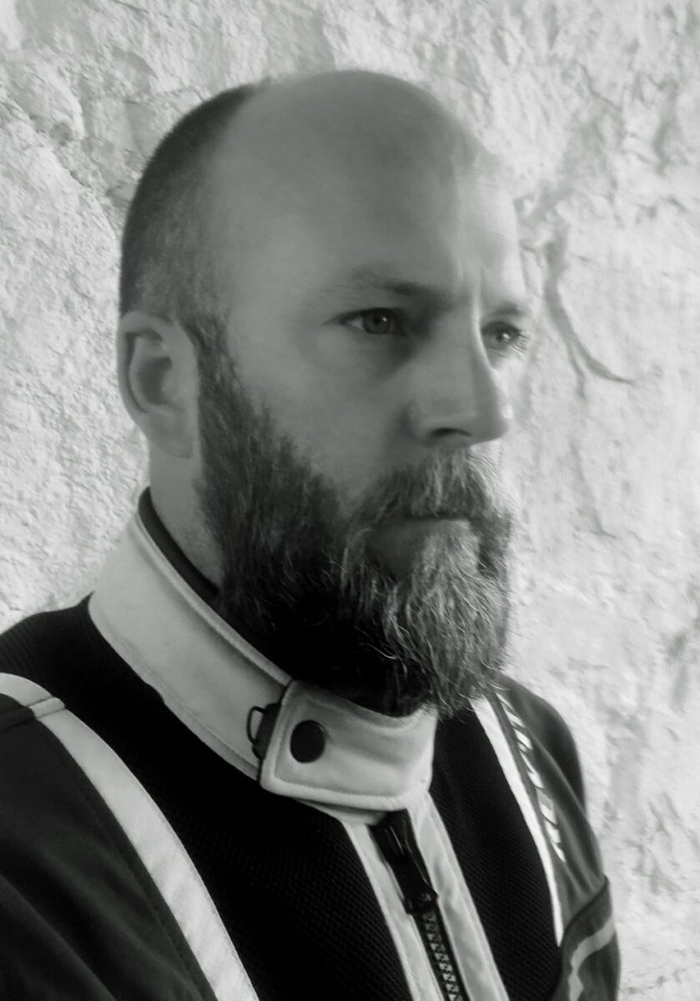
I grew up on the river here in Galway, on the long walk. It was a very interesting childhood influenced hugely by the tide, the river and the sea and the people who worked on her. Me and my best childhood buddy, Tom Baille, spent our youth on each other’s family boats and messing around the docks and the commercial craft that came through there. If our parents knew what we were at, we would have been killed! Our combined attitude towards water safety was absolute zero; words of caution from others were utterly ignored, and stories of drowning were abstract to our young minds.
Things changed rapidly in one year at the age of nine, I accidentally cycled my bike off the quayside, which scared the hell out of me permanently and that winter I watched two drowned bodies being retrieved from the river. I watched from my bedroom window as two souls were carried from a horrible car accident on the long walk by the fire brigade. The conversation about water safety was a constant after that.
My relationship with the sea and the river flourished as I grew up, sailing with Dad on our hooker ‘aoife’, rowing with the Jes, swimming, fishing, camping on the lake. In hindsight, I was blessed to have such an encouraging dad when it came to water sports. It is only now that I realise how lucky I was that he was so naturally considerate about safety at sea or near the water and imparted that to everyone who sailed with him or around him. I will never forget a trip to Inishturk in the late 90s, when dad sailed a course towards an older lobster fisherman in his currach. He pulled alongside and bought a few lobsters off the man, and before we parted, dad deposited a brand-new life jacket into his currach, as the man had none. To me, it was a subtle bit of symbolism that the attitude to water safety was changing and that safety at sea should not be complicated.
I think back then, some men found safety measures to be emasculating; we are better off now, as are the families of those who have seen the happy results of life jackets, EPIRBs, flares, serviced lifeboats, etc.
Unfortunately, in my lifetime on the Long Walk, the sound of the coast guard helicopter and the sight of the RNLI boat have only increased; suicides are more prevalent, drunken accidents more frequent. My sister Roisin Coyle and I have been involved with half a dozen river rescues. It is a bizarre situation to find yourself assisting in the saving of a fellow human’s life. Initially, it comes naturally, but the aftermath of an incident is overwhelming, like a bad dream. It cannot be anywhere as complex and painful as the experience of the person in the water.
The conversations that follow those interventions are cathartic, but the answers about water safety are vague, not as vague as the answers to suicide prevention.
However, my experience has brought me to a few conclusions: water safety must be taught and experienced to fully understand its value. From a young age, people need to comprehend the rapid danger of water as well as its rewards. Ethics need to become part of primary schooling education; personal safety, social responsibility are key to a safe society. Our infrastructure for water safety must be supported and celebrated; the hard work of many has made our waterways less dangerous.
Suicide prevention is an uncomfortable subject matter for most; it does not need to be complicated – a little more kindness and a little more patience could make a huge difference to someone having a hard time.
Keep talking about water safety, make it a habit, encourage good behaviour in others and consider the limitations of the water.
Peter Connolly, Bádoirí an Chladaig
My love affair with the water started as a young child, with my father taking us swimming at the Salthill beach where the pools used to be in the mid-60s. At the time, my father used to restore traditional boats and went on to build more modern yachts. Hence, we spent our summers on the bay, with the excitement that came with sailing.
Having become more confident in the water, my brothers brought me to the canal at Ward’s shop, where they learnt to swim from Jimmy Cranny, after whom the pool in Leisureland was named. He was a man who had a huge influence in making learning how to swim fashionable, as it was not such a pastime back then. It showed me the natural beauty of the canals heading up toward the lake and how we could make use of them safely.
I clearly remember in the 70s pulling up to Mutton Island with my father and my uncles, using the pier on the bay side of the island, and lighting a fire on the beach for the tea and sandwiches. My siblings and I became very adept at jumping in and out of the boats, a skill that has stuck with me.
From there, I was hooked. We were fortunate that my father and uncles had such a love of the sea, and they instilled that in me and my 13 siblings! We learnt to dive from the boats, where they would practice what are now known as ‘man overboard’ exercises with us. That was done in a fun environment with the underlying safety message of taking care while on the water and being aware of your surroundings. In my memory, it prepared us for the initial shock of falling into the water and how to react and not panic.
At the time, we would have had basic life jackets, a hugely different article from what we have now.
I spent 20 years in Canada from the 70s, and there I continued sailing on Lake Ontario as well as learning to scuba dive. On my return to Galway in the late 90s, I reconnected with my father, sailing on his traditional gleoiteog, Fiona. In 2008, I joined up with the Claddagh Boatmen. At the time, they were refurbishing their first 23-foot gleoiteog, which became the catalyst for restoring the Claddagh fleet. As a result of this, there are now two groups dedicated to this, and between them, there is now a fleet of curraghs, gleoiteogs and hookers in Galway again.
Over those 60-odd years, I have seen a massive change in attitude toward water safety. It is now seen as highly inappropriate not to have a life vest on, whereas going back even as close as 20 years ago, possibly only a third of people used them. That sea change has come from what is now the adult community, who have grown up through the push for safety. Nowadays, most youngsters learn to swim at a young age through their schools or being brought by parents for lessons, and any who becomes involved in any maritime pursuits has the safety aspect drilled into them.
Water Safety Ireland is an organisation that has worked closely with us, offering advice and training. The sailing fraternity also looks after each other, always on hand to assist other water users, be it offshore or inland.
Nowadays, safety has become the byword on the water, and the mindset of “it is more fun when it is safe fun” has become more prevalent. None of us wants to see our friends, or anyone else, drown, or have to see the aftermath of the grief of the families and survivors, and the trauma which the rescuers sometimes feel.
Miriam Hanney, daily Blackrock swimmer
Swimming in the sea is the most wonderful of addictions. The experts talk about the endorphin rush and they are not wrong. Even in February, the hardest month to swim in Salthill with its biting easterly wind and very low temperatures, we say: “Aren’t we so lucky!”
24 years ago, I got diagnosed with rheumatoid arthritis and found that swimming offered great relief from the inflammation. That is when I began daily swimming. The relief in the sea and the wonderful camaraderie at Blackrock was medicine in itself.
For the first twelve years it was always the same friendly faces at Blackrock, but gradually new swimmers were tentatively dipping their toes. They were welcomed and advised on safety and were kept an eye on until ashore. With Covid there was a huge swell in numbers and, with that, experienced swimmers often had to rescue the novice who was caught unawares in big waves, strong currents or the very quiet but insidious and potentially deadly hypothermia. There are days that every swimmer needs to walk away because it is too powerful or rough to risk.
Many of the first swimmers with whom I had the pleasure to spend time are gone – hopefully to calm seas and summer temperatures. New faces arrive to join the Blackrock village, and I hope are as welcome as I was over twenty-two years ago.
People have gone down the steps of the tower for many decades with the weight of the world on their shoulders and returned lighter. Some will want to swim Galway Bay; others will want a quick dip. There is a place for us all to feel the benefits of that big, beautiful, blue sea.
Andrew Lally, Lifeguard
Water has been part of my life for as long as I can remember. Growing up in Galway, it was always there – the ocean at Salthill, the rivers, the lakes. But my real connection began when I was 14. That is when I walked into Leisureland for my first water safety class with Water Safety Ireland. I had no idea at the time how much it would shape the rest of my life.
Those classes taught me the fundamentals – respect for the water, lifesaving skills, and how important it is to be prepared. I loved it from the start. Before long, I trained as a lifeguard and spent summers working on beaches in the city and beyond. Standing on those sands, watching over swimmers and knowing you are the safety net if something goes wrong was a responsibility that changed me and made me very aware of the importance of having the right skills, attitudes and behaviours around water.
Through my college years, I worked as a beach lifeguard, then as a Water Safety Ireland instructor, teaching others the same skills that hooked me at 14.
I got more involved with Water Safety Ireland, joining the Galway Water Safety Area Committee. Over the years, I became an examiner, a beach lifeguard tutor, a pool lifeguard tutor, and proud to have served as chair of the Galway branch of Water Safety Ireland, which has 30 committees nationwide. I train and examine lifeguards all over the county, making sure they are ready to help when needed.
Lifesaving is not just a job or a volunteer role for me – it is also, believe it or not, a sport, and one I love. It has taken me to Australia, Italy, Spain, and Denmark. In 2019, I remember spending my own holidays refereeing at the Lifesaving European Championships, which is quite special in that the top lifesavers from around the world compete to see who is the best. Two solid weeks on the pool deck, giving back to a sport that gave me so much. People often ask why I do it, and the truth is simple: because it really is one sport that can save lives.
For years, my Sundays have been the same – down at Leisureland pool, teaching lifesaving classes or across on Salthill beach doing the same as part of a team of volunteers, such as fellow Galway volunteers Ross Coll and Annette Hennigan, who are doing so much hard work at those sessions every summer.
Everything I have done – from my first class in Leisureland to seeing an Irish competitor standing on the start line in Australia, or refereeing in Italy – comes back to one thing: keeping people safe around water. It is not just about sport or skills; it is about saving lives. If I can teach one person to respect the water or help one lifeguard be ready, then every hour volunteered is worth it.
Galway is part of who I am, and so are Galway’s waterways. If my story helps to encourage someone to take lifesaving training with Water Safety Ireland, then it is a story worth telling.
Edmond Sheil, Oranmore Maree Coastal Search Unit (OMCSU )
Formed in 2016, OMCSU is based in the Oranmore/Maree area and is a registered charity. It is a 100 per cent voluntary organisation, and we conduct searches for victims missing in the Galway Bay area, covering the north and south shores of the bay and the entire bay area from the water.
These searches are carried out by volunteers on the shore, by our volunteer drone crew and volunteer water crew. In addition to the Galway Bay area, we have conducted searches on Lough Corrib, the Clare River and the Clare coast from Black Head to the Cliffs of Moher. We are also available to conduct searches in other areas when requested to do so. Those who will benefit from our unit are the families, friends and communities of casualties and the other statutory and voluntary organisations who require our assistance. Our objectives are:
-To carry out the business of search and recovery on both land and water.
-To provide leaders to coordinate and lead searches, and to assist the statutory and other voluntary organisations in the rescue or recovery of casualties.
-To provide pastoral care to the family and friends of casualties.
-To provide a base for the coordination of searches, the provision of refreshment and support for the searchers.
Currently ,our shore searches of Galway Bay are supported on the water by our boat crew which has the use of an eight meter RIB. The unit also has two jet skis.
All RIB and jet ski crews are power boat and jet ski trained, and this training is updated frequently. This RIB is essential for our searches, as the shore teams can contact the RIB during a search and ask it to investigate a sighting in the water. This ensures the RNLI team does not have to be called out and can focus on rescue activities.
In addition, the RIB does water searches based on mapping provided by the Marine Institute, who provide higher probability search areas based on tides, currents, wind direction and duration a casualty is in the water.
OMCSU has 97 identified zone leaders with approximately 40 active for any search to date. All active zone leaders are familiar with at least two zones of our main designated search area, from Black Head in Clare back to Carraroe in Connemara. They understand the entrance and exit points of a particular zone and the hazards in that zone. When searches are not taking place, training days are held to make sure zone leaders are properly trained and can safely lead teams to search designated zones, of approximately 4km in length, along the coast.
Search conditions along Galway Bay are very challenging, with over 145km of coastline to cover, and only approximately 2km of that is beach. The rest is a mix of seaweed, rocks and mud banks. Therefore, the safety of those searching is of critical importance.
With 384 general members currently in our database, we have a significant resource pool of people available for searches. In addition, friends and family of a missing person generally join in the searches. Health and safety are a critical element in any search, and this is comprehensively addressed by the base co-ordinator in advance of each search. The base co-ordinator addresses such issues as obeying zone leaders, having appropriate footwear, making sure each person has a stick and hi-viz and understanding appropriate social media behaviour when on a search. The majority of zone leaders have completed first aid training and carry a first aid kit with them on a search.
A total of 34 members have received first aid training, and refresher courses are held annually. A total of 14 people have received defibrillator training and also get annual refresher training. From a catering point of view, the catering team have done HPASS training. Searches undertaken by OMCSU are at a time of crisis for a casualty’s family, and our family liaison and pastoral care team play a hugely important role in supporting the family and friends during the searches. Everyone on a search is invited back to the base where the search starts from for a cup of tea, a sandwich and a chance to unwind.
Since 2016, OMCSU has been involved in over 35 searches, and thankfully, the majority of missing people have been found. Searches can last as long as 50 days and are generally done at a low tide to ensure the maximum amount of shore can be covered between the low tide and high tide marks.
Declan McGuinness, Claddagh Watch Patrol supervisor
The Donegal man’s dedication to Claddagh Watch and Galway’s community wellbeing
Declan first joined Claddagh Watch in May 2020 after hearing a call for volunteers on Galway Bay FM. Claddagh Watch is a volunteer organisation set up to prevent accidental death and suicide around the waterways of Galway city. Having previously spent four years with Killybegs Coast and Cliff Rescue, he felt he could lend a helping hand — and he has not looked back since.
Just a year later, Declan became a supervisor and has since become a key figure in the organisation. Over the years, he and his team have helped prevent numerous incidents, offering vital support to those in distress and even carrying out rescues when needed.
Like all Claddagh Watch volunteers, Declan has completed ASIST (Applied Suicide Intervention Skills Training ), SafeTALK, as well as CPR, first aid and Rape Crisis Awareness training. He is also one of the volunteers who trains and leads inductions for new members joining Claddagh Watch. He was very proud to be awarded Volunteer of the Year in 2022.
Inspired by his experiences with Claddagh Watch, Declan recently began a degree in holistic counselling and psychotherapy and has just completed his first year of the four-year course, a testament to his ongoing commitment to helping others.
If you are thinking about joining Claddagh Watch, know that you will be part of a team of dedicated volunteers from all walks of life who truly support and look out for each other on every patrol. You will never be on your own. Comprehensive training and ongoing guidance are always provided to help you handle any situation with confidence. It is a truly rewarding experience, even on the coldest winter nights.
You can email [email protected] for further details.
Pierce Purcell Senior, Galway Maritime
Galway Bay safety and rescue alert
Marine activities on Galway Bay have grown enormously over the last number of years. Pierce Purcell a founder member of Galway Bay Sailing Club remembers moving to Galway as a teenager in the late sixties when there was little boating on the bay.
Today there are several clubs dotted around the bay, as well as Inis Mór and Inishbofin and a hive of traditional sailing with two clubs at the Claddagh reviving the traditions of the craft and local heritage.
In addition there is kayaking, windsurfing, swimming, fishing, paddle boarding and kiteboarding and diving all availing of our waters.
Up to the mid seventies water rescues were mainly provided by the volunteer members of Galway Sub Aqua Club who were stalwarts supporting regattas and Salthill Prom Swims.
Nowadays every club has their own power boats to provide safety cover. Galway Bay Sailing Club (GBSC ) at Renville Oranmore have dinghy and cruiser sailing including accessible sailing most evenings during the week as well as free introductory sailing on Friday evenings and always have safety craft on duty.
A full time marine training centre operates as part of the club with courses from eight years upwards to adult courses in dinghy sailing, powerboat licenses, navigation and first aid as well as kayaking and paddleboarding.
In 2020 the club decided to enhance a bay users safety group which has proved incredibly helpful since then. Under the guidance of club member Cormac McDonnachda, Galway Bay Safety and Rescue Group Alert moved quickly into action as a result of the Barna girls who drifted out to Aran and were eventually rescued by local fishermen Morgan and his dad Patrick Oliver.
The objectives of the group are to create a large group of skippers and walking groups, who regularly use the bay or walk the coast, so that we can react quickly when requested to the need to search for a casualty. The users agree to avoiding the use of the group for any social networking or trivial communication. This is the secret for its success.
Inspector Brendan McGrath, An Garda Síochána, Galway Garda Station
Having worked as a Garda for 20 years in Dublin, I transferred to Galway in 2014. I was struck by the number of calls attended to by the various emergency services in Galway city in response to reported incidents in the waterways in Galway. There was hardly a week that went by that the emergency services were not called to an incident where an injured party had entered the water accidentally or intentionally. In my role as the Garda Inspector in charge of search operations, I had regular contact with our colleagues in the Fire Service, RNLI, Coast Guard and Civil Defence.
Following a missing person report one Christmas, it was confirmed from CCTV footage that the missing person had accidentally fallen into the River Corrib near Spanish Arch. What followed was an unprecedented search operation over the Christmas/New Year period involving hundreds of volunteers. It was during this search operation that the missing person’s mother took my hand and asked me to promise to bring her child home. This powerful moment has stuck with me ever since. I promised the search would continue until they were recovered. Her child’s body was recovered weeks later, following an extensive search of the coastline around Galway Bay.
Arising from this search operation, I was involved in the formation of The Oranmore Maree Coastal Search Unit (OMCSU ). This volunteer group has grown from strength to strength, and coupled with Claddagh Watch, both volunteer groups have been a fantastic addition to all the emergency services and the people of Galway. The waterways are a fantastic amenity in Galway, which is there to be enjoyed and respected. It is important to watch out for each other in their environs, and if you have concerns for someone, do not ignore them. Sometimes all it takes is a chat or a simple ‘Are you OK?’ to show a person at their lowest ebb that someone cares.
