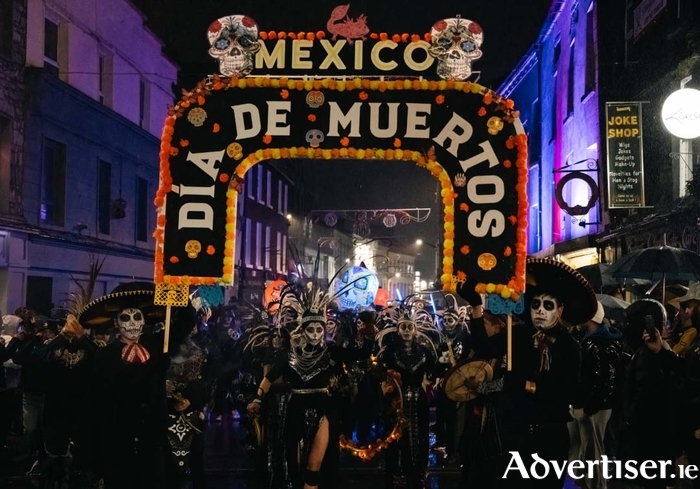
The streets of Galway were filled with colour, music, and tradition on Sunday, as more than 80 members of the Mexican community took part in the Samhain Procession, a vibrant celebration of Día de Muertos (the Day of the Dead ). This marked the second year of the event and the first time it received official support from Galway City Council.
The Samhain Procession was a unique celebration that brought together three ancient traditions - Samhain, Día de Muertos, and All Souls’ Day - all dedicated to honouring and remembering our ancestors. The event formed part of the wider Gaillimh Ah-Boo! festival, a citywide programme celebrating Galway as the Home of Halloween.
Beginning at St Nicholas’ Church and moving along Shop Street, the procession captivated onlookers with its stunning display of traditional Catrina makeup, colourful costumes, and live performances. The celebration featured two musical performances, two folkloric dances, and two pre-Hispanic (ancestral ) dances, blending the vibrant rhythms of Mexican culture with the mystical spirit of Irish Samhain.
“The response from the public was truly heartwarming,” said Gabriela Lorenzo from the Mexicans in Galway community. “People stopped to watch, smile, and join in the celebration. It means so much for us to have the opportunity to share such an important tradition with Galway, and to see it so warmly embraced.”
This year’s inclusion of the Samhain Procession in the Gaillimh Ah-Boo! programme marks an important step towards celebrating Galway’s growing cultural diversity and strengthening community connections.
Kate Howard, Galway City Council’s Night Time Economy Advisor said it was such a pleasure to bring this event to the streets of Galway.
The Samhain Procession offered Galwegians and visitors alike a vivid, heartfelt celebration of remembrance, one that honours the past while embracing the spirit of community and creativity that defines Galway.
The event was brought by Galway City Council Night-Time Economy, in partnership with the Mexican Community in Galway, and with the support of Galway City Council, Creative Ireland, Department of Culture, Communications and Sport, and Failte Ireland.
