Congreve’s Balsamic Elixir will cure what ails you
Fri, Apr 14, 2017
If you are of a certain age you will no doubt still be able to rhyme off several natural remedies from your childhood. I recall the use of mud to ease aching feet, and of course the use of a dock leaf on a nettle sting. Although, whatever properties were in the leaf we negated by our vigorous rubbing on the wound that probably created an aggravation far worse than the initial sting.
Those remedies were largely unnecessary and were applied mainly as part of childhood play. But there was a time when local folk medicine was the only accessible cure. Traditionally, the absence of medical knowledge and medical means necessitated a close observation of the natural world. Nature’s complex balances were noticed by early humans and from that a dependence on natural flora and fauna extracted remedies existed. Each Mayo area had its own variation of a widely known cure for the most common physical and mental complaints. Herbs mixed with butter and goose grease were identified in the Louisburgh area as being cures for running sores, boils, and erysipelas (skin infection). The district of Cross had its own cure for skin infection. Nettle juice taken about three times during the month of March was said to be a defence against all skin diseases for the year. Toothache was cured by smoking a clay pipe of tobacco, and for a swelling from a toothache in the face they would pull some chickenweed and apply to the inflammation as a dressing. Chickenweed is still used for its cooling effect. In some cases the remedies grew in time to become part ritual and were often fused with each locality’s Christian practices and became accepted locally as magic. A sprain was treated in Belcarra by the local weaver who would supply the injured with wool thread from his loom. The thread would be tied around the hurt limb and all would be fixed. The weaver enjoyed quite a reputation as a fixer and pieces of his thread would often be sent to England for boys from the district.
Read more ...RMS Titanic outcome was bigger than we think
Fri, Apr 14, 2017
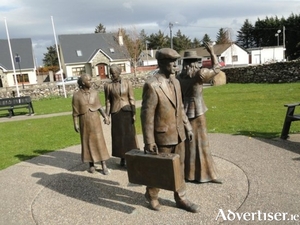
In 1912, the county of Mayo had been through seven challenging decades of continuous population decline. The reasons for such a plummet in numbers were multiple. High infant mortality, disease brought on by poor diet, a demanding lifestyle, and high emigration tested the people of Mayo’s strength to the limit.
Read more ...Congreve’s Balsamic Elixir will cure what ails you
Fri, Apr 07, 2017
If you are of a certain age you will no doubt still be able to rhyme off several natural remedies from your childhood. I recall the use of mud to ease aching feet, and of course the use of a dock leaf on a nettle sting. Although, whatever properties were in the leaf we negated by our vigorous rubbing on the wound that probably created an aggravation far worse than the initial sting.
Those remedies were largely unnecessary and were applied mainly as part of childhood play. But there was a time when local folk medicine was the only accessible cure. Traditionally, the absence of medical knowledge and medical means necessitated a close observation of the natural world. Nature’s complex balances were noticed by early humans and from that a dependence on natural flora and fauna extracted remedies existed. Each Mayo area had its own variation of a widely known cure for the most common physical and mental complaints. Herbs mixed with butter and goose grease were identified in the Louisburgh area as being cures for running sores, boils, and erysipelas (skin infection). The district of Cross had its own cure for skin infection. Nettle juice taken about three times during the month of March was said to be a defence against all skin diseases for the year. Toothache was cured by smoking a clay pipe of tobacco, and for a swelling from a toothache in the face they would pull some chickenweed and apply to the inflammation as a dressing. Chickenweed is still used for its cooling effect. In some cases the remedies grew in time to become part ritual and were often fused with each locality’s Christian practices and became accepted locally as magic. A sprain was treated in Belcarra by the local weaver who would supply the injured with wool thread from his loom. The thread would be tied around the hurt limb and all would be fixed. The weaver enjoyed quite a reputation as a fixer and pieces of his thread would often be sent to England for boys from the district.
Read more ...Taoiseach Enda Kenny and Minister Bruton Announce GMIT Working Group
Fri, Mar 31, 2017

Taoiseach Enda Kenny, TD, and the Minister for Education and Skills, Richard Bruton, TD, today (Friday) announced the establishment of a working group which will formulate a plan for a sustainable future of the GMIT Mayo Campus in Castlebar.
Read more ...Bohernasup water outages concerns councillors
Fri, Mar 31, 2017

Householders in the Bohernasup area of Ballina have been battling with regular water outages over the past year that needs to be fixed now, Fine Gael councillor John O'Hara told the March meeting of the Ballina Municipal District this week. Before the start of the district's monthly meeting, Cllr O'Hara asked for a suspension of standing orders to discuss the topic.
Read more ...Councillors want to 'know what they are getting into' on Asahi site
Fri, Mar 31, 2017

The elected members of the Ballina Municipal District refused to throw their full backing behind the potential sale of 26.13 hectares of land at Tawnaghmore Upper Killala (the old Asahi plant site), to a northern Irish based company for the construction of an IT services centre on the site. The councillors were presented with an item at their monthly meeting this week to endorse the disposal of the land for a potential figure of €2,582,689.20 to Derry based company Atlantic Gateway Ltd, if after a six to 12 month period of a feasibility study by the potential purchaser it was satisfactory for their needs.
Read more ...Preparing for the invasion of Mayo
Fri, Mar 31, 2017
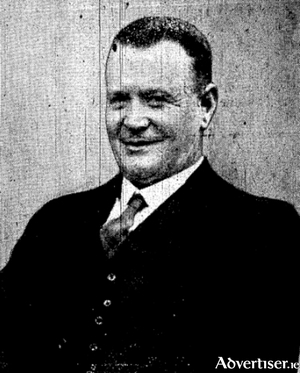
"People in the country in a position to know have stated that a national emergency may arise any moment, and an attack on the country may be imminent", so warned MJ Egan, County Commissioner for Mayo at a public meeting in Ballyhaunis in August 1940. An official state of emergency had already been in place since being proclaimed in the Dáil on September 2 1939, the day after Nazi Germany invaded Poland. Egan was principally Mayo County Secretary, but as County Commissioner his role was to create a network of parish councils that would maintain services in the event of an invasion and the possible incapacitation of central government. The Ballyhaunis meeting created its own council, bringing the figure to over 100 councils formed in 76 Mayo parishes. Since the fall of France to the Nazis in mid-1940, Britain was forced to tighten its own rationing programme. This had knock-on effects for Ireland. A key function of the parish councils would be the securing and distribution of food in a post-invasion scenario. Egan reported to, and received instruction from the new Department of Supplies under Minister Seán Lemass. It was through Egan as County Commissioner that a series of emergency precautions and directions were issued to the Mayo public.
Read more ...The practical patriotism of the ICA
Fri, Mar 31, 2017
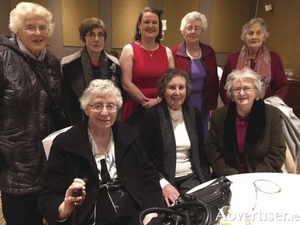
I was fortunate to have been invited this week to give a talk on the history of Castlebar to the local branch of the Irish Countrywomen's Association (ICA). The evening went well, and my thanks to Maura McGuinness, Patricia Larkin, and all the membership for their hospitality. It was in preparing for that talk to an all-female audience that I was reminded of how devoid our local history is of women and women's groups, when compared to their male counterparts. In the 400 years I covered, only five women featured publicly and briefly. We know the reason for this was because a male dominated society had structured a degraded role for women which was almost impossible to break from. For those women who wanted to express themselves, the ICA was and remains an important outlet since its inception in 1910.
Read more ...Looping back to Lecanvey
Fri, Mar 31, 2017
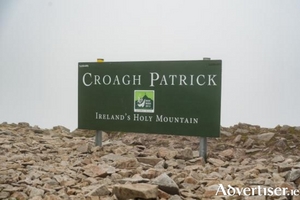
The community in Lecanvey have come up with a proposal that could see the wear and tear on the traditional pilgrimage path on Croagh Patrick halved. The West Mayo Municipal District held their march meeting in the Lecanvey Communty Centre and before the meeting got going, they were briefed on the proposal by members of the Lecanvey Community Centre Committee
Read more ...Mayo eateries clean up at Restaurant Awards
Fri, Mar 31, 2017

There were nine food and drink establishments celebrating this week at the Connacht finals of the Irish Restaurant Awards in the Radisson Blu in Sligo. In the overall provincial awards, Café Rua in Castlebar picked up the win in the Best Kids Size Me section. When it came to the Mayo specific awards, Sage in Westport was the winner of 'Best Restaurant', with Johnathan Keane from The Lodge at Ashford winning Best Chef. The Best Gastro Pub award went to Flanagan's Gastro Pub in Claremorris and Bar One in Castlebar was the winner of the Best Casual Dining gong.
Read more ...Mayo literary evening at The Linenhall
Fri, Mar 31, 2017
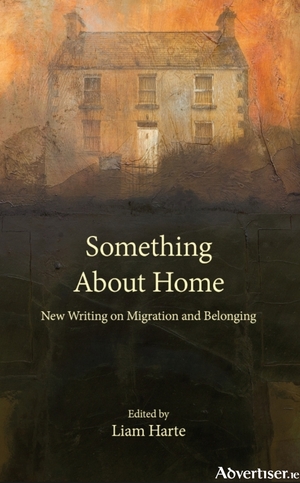
Something About Home, is an evening with Mike McCormack, Dr Liam Harte and Mayo writers, taking place at the Linenhall Arts Centre in Castlebar on Monday 10 April at 8pm, which ties in with the recent publication of an anthology of the same name.
Read more ...National Children’s Choir to host regional concert in Mayo
Fri, Mar 31, 2017

The National Children’s Choir is a school-based choral experience for primary school children. Affiliated pupils from fourth, fifth, and sixth classes in Irish primary school learn a common repertoire of songs. The repertoire challenges the pupils to perform a broad range of songs from Bach to The Beatles. The choir enables young people to experience the sheer joy and involvement in music and song. The National Children’s Choir aims to foster a love of choral singing among primary school pupils and to enhance the musical education of those involved.
Read more ...