Search Results for 'Royal Hotel'
10 results found.
Galway Golf Club, the Barna course
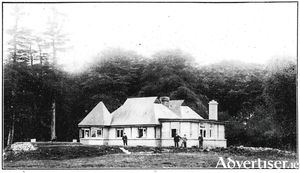
On May 9, 1905, there was a meeting held in the Royal Hotel of golfers that had been banned from membership of the Gentian Hill club by the landlord there, Sebastian Nolan. They decided to form a new club under the presidency of the Hon Robert Dillon. It was reported that on that day a committee had accompanied Larkin, the Bray professional, over a promising new course on Mr Marcus Lynch’s property at Barna and were happy about the suitability of the ground for a nine-hole links.
Galway Lawn Tennis and Croquet Club
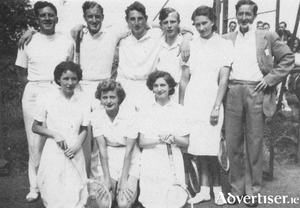
One hundred and twenty five years ago this month, at a meeting in the Royal Hotel, a new and rather exclusive club was formed bearing the title ‘The Galway Lawn Tennis and Croquet Club’. Initially, it was proposed that they play tennis at Glenarde (where the Ardilaun Hotel is today) but that their stated intention was to acquire land specifically to lay it down for proper tennis and croquet.
Commercial Boat Club, 150 years

As a result of a number of years planning by some enterprising young men, a meeting took place in the hall of the Mechanics Institute on this day, May 15 1875, one hundred and fifty years ago with the purpose of forming Galway Commercial Rowing Club. The resolution was formally proposed and seconded and unanimously adopted. The subscription was fixed at £1 which included the entrance fee and the annual sub. The following committee was elected – Laurence Carr, J St George Joyce, Morgan Lee, Thomas O’Gorman, Thomas Hogan, Thomas Hayes McCoy, Y Kean, James Maher, B Roche and Patrick Bodkin. In addition, 62 members enrolled.
A new shopping experience in Galway – Woolworths
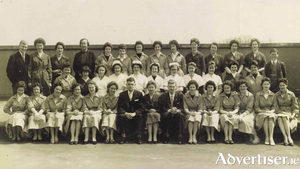
The expansion of the Woolworth chain in Ireland in the early 1950s proceeded smoothly except in one location, Galway. A number of city councillors, supported by some local retailers, were against bringing new business into town. Eventually, Woolworths purchased the site of the old Royal Hotel in the Square. The hotel was demolished and a new purpose built retail store constructed in its place. When Woolworths advertised for staff, more than 500 girls applied. Officials of the firm were very taken aback and it took several days to complete the interviews. The weekly wage offered to the girls, £4 7s 6d, was very good for the time. About 50 people were initially employed.
Soccer in Salthill
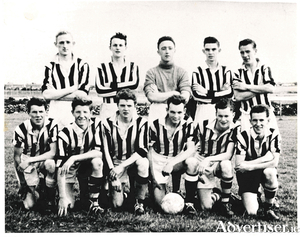
The game of soccer in Salthill really began with Christy Gilbert. He formed a club in the early 1940s called Salthill Crusaders and they played for several years with some success. Some of the players associated with the club were Harry Lupton, Donal Murray, Frank Lydon, Arthur Stephens, Brendan Collins, Tommy Stephens, Billy and Leo Shaw, and Donie Kelleher.
The French Revolution and the revolution in the Martin household
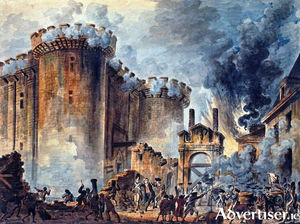
On the afternoon of July 14 1789 a mob unleashed its fury and frustration by forcing an entry into the Bastille, a medieval armoury, fortress and political prison in the centre of Paris. In the short but bloody battle that ensued some 98 of the mob were killed, as were three officers of the guard. Three more were lynched, and Marquis de Launay, governor of the prison, and the local mayor, Prevot de Flesselles, who had pleaded for peace, were stabbed to death and beheaded. Although the prison contained only seven inmates at the time of the storming, it was seen as a symbol of the monarchy’s abuse of power. It was the flashpoint of the French Revolution.
Galway Hockey Club, the first seventy years
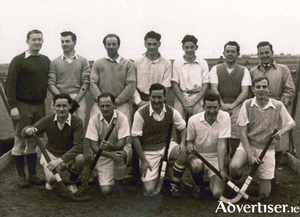
In 1951 Hastings Elliott Jephson was working in the ESB in Galway when he had the idea of setting up a hockey club in the city. He and his friend George Bevis decided to see if there was merit in this notion, so they simply went from door to door around town asking people if they would have any interest in playing the game of hockey.
‘Betrayed into ruin by the arts such as the weakness of humanity’
Such is the weakness of man, it seems, that even the mighty Daniel O’ Connell may have succumbed to the allures of the fair sex, committing an indiscretion in his youth, which came back to haunt him in later years when he and his wife Mary shared ‘abiding affection’.
When the hangman came to Galway
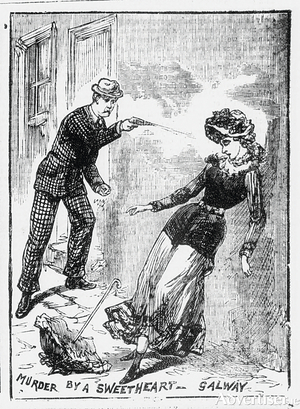
In 1883, Thomas Parry, a 26-year-old assistant shepherd, was working for Major Thomas Braddell in Wexford. Also working there was Alice Burns, a 19-year-old Galway girl. The two had a whirlwind romance, Parry was deeply in love and bought her a beautiful ring and they became engaged.