Search Results for 'Regional Hospital'
21 results found.
Proposal to name road after renowned Galway writer Ken Bruen to be brought before city council next month

Galway could soon be memorialising one of its best-known writers following calls to honour Ken Bruen by renaming the road beside his former home.
The Streets Of Galway road race
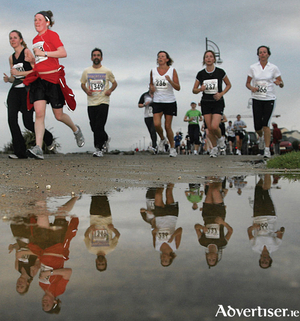
The inspiration for this race, which was run for the first time on August 15 1986, came from that great sports man Jack Mahon who had attended a number of such races in different parts of the country. It was run under the auspices of Clare River Harriers with a B.L.E. licence. It was a race designed for all the family with a central theme of “Sport for All” and was described as a ‘fun run’; there were no elite prizes but local businesses sponsored right down the field. There was a big display of the medallions for all the category winners in the window of The Great Outdoors.
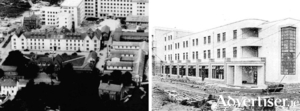
The Regional Hospital under construction
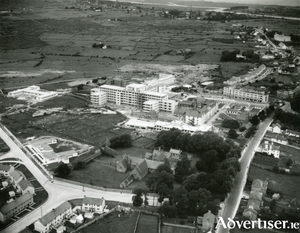
The National Library gave us this aerial photograph of the ‘Regional’ under construction in 1953. The foundation stone for the hospital was laid in 1949 by Dr Noel Browne, the Minister for Health. Just in front of it you can see the old Central Hospital. The building of the new involved the demolition of the rear wing of the old Central. Long-term patients in the Central were accommodated in temporary huts located in front of the building, an arrangement that allowed the Central to function more or less normally during construction.
The man who saved Eyre Square: Remembering C.I. O’Flynn, guardian of Galway’s heart
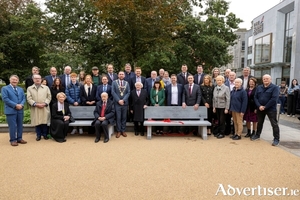
On a soft Galway afternoon last Thursday, as the autumn light slipped across the paving stones of Eyre Square, a small crowd gathered near the entrance to the Eyre Square Centre. City councillors, family members, and lifelong friends stood together in quiet pride, as President Michael D. Higgins unveiled a memorial bench to one of Galway’s most steadfast public servants — Mr Clement Ignatius O’Flynn.
The KLM disaster
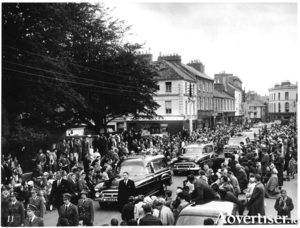
On this day, the 14th of August in 1958, the Dutch KLM Super-constellation airliner named Hugo de Groot crashed into the sea about 100 miles off the Conamara coast with the loss of 99 lives. The flight was on its way to New York from Amsterdam via Shannon with 91 passengers and eight crew on board. Nobody survived the tragedy. It was the worst disaster involving a single plane in the history of aviation up to that point.
First female mayor to be honoured
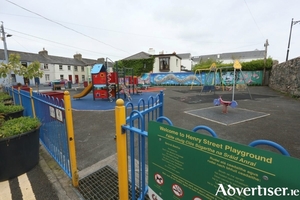
Byrne (1917-2004), for decades a senior nurse in the Regional Hospital (now UHG), lived her entire life on Henry Street and nearby on St Mary's Road.
The changing of the guard
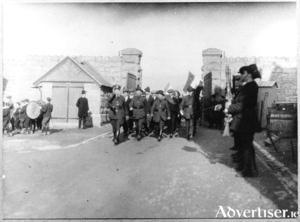
On this day, February 13, 1922, the IRA took over Renmore Barracks from the British. When the Anglo-Irish Treaty was ratified on January 7, 1922, it was only a matter of time before the British Army would leave the Barracks. There was some suggestion initially that the Regional Hospital might transfer to the barracks. On February 2, the last Black and Tans had left Galway by train. The British did not want to surrender the Barracks to the Volunteers, so an arrangement was made where they would leave at a certain time, and the formal handover would take place a few hours later.
Hospital’s critical carers reunite
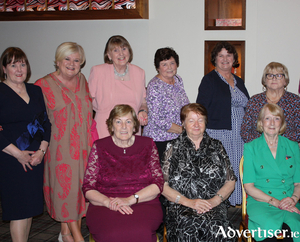
For more than half a century, a highly skilled cadre of specialised hospital staff have cared for the most complex and critically ill patients in Galway.
Galway hospitals
We know there was a hospital in High Middle Street in 1509, though it was probably a poorhouse in reality. In 1542, the Corporation built St Bridget’s Hospital on Bohermore. It subsequently served as a Leper Hospital. The 1651 map of Galway shows four hospitals. In 1820, a fever hospital opened on Earl’s Island, and in 1824, a small lying-in hospital was established on Mill Street at Madeira Island. The County Infirmary opened on Prospect Hill in June 1802.
Midland Regional Hospital formally launches midwifery-led clinic and antenatal education
Midland Regional Hospital Maternity Services has announced two exciting new developments in maternity care for women of the Midlands region with the launch of a community midwifery-led clinic and parentcraft antenatal education for expectant mothers.