Search Results for 'William Randolph Hearst'
4 results found.
The Sword and Mace
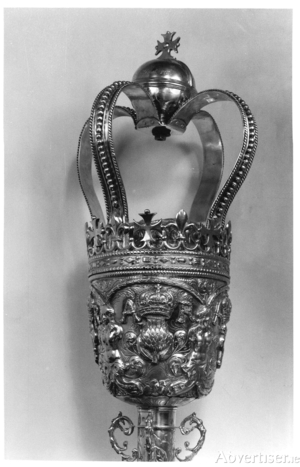
The Galway civic sword and mace are among the finest specimens of municipal corporation insignia in Ireland; the sword in particular is noteworthy and can be compared with the best of civic swords in these islands.
The man who saved Eyre Square: Remembering C.I. O’Flynn, guardian of Galway’s heart

On a soft Galway afternoon last Thursday, as the autumn light slipped across the paving stones of Eyre Square, a small crowd gathered near the entrance to the Eyre Square Centre. City councillors, family members, and lifelong friends stood together in quiet pride, as President Michael D. Higgins unveiled a memorial bench to one of Galway’s most steadfast public servants — Mr Clement Ignatius O’Flynn.
The Galway sword and mace
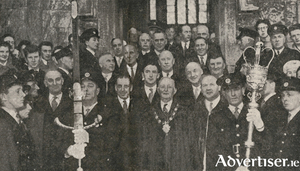
The Galway civic sword and mace are among the finest specimens of municipal corporation insignia in Ireland; the sword is particularly noteworthy and can be compared with the best of civic swords in these islands. Swords and maces were first carried by the king’s servants as symbols of the authority of the king himself. As time went on, the mayors and bailiffs of towns acquired swords and maces of their own, some following charter grants, others by mere assumption without specific authority. These were usually borne before the dignitaries concerned when they went in procession or were actively displayed when they acted otherwise in their official capacity. Maces, which were originally weapons, are staves of authority. Swords symbolise the legitimate use of force.
‘The most malignant man in Irish history’
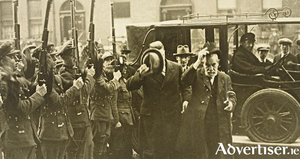
After the enthusiastic reception at New York’s Waldorf Astoria Hotel on June 23 1919, Eamon de Valera was deluged with invitations. For the next 18 months he kept the cause of Ireland before the American public. Criss-crossing the country he addressed public meetings, and state legislatures, receiving on the way a plethora of honorary doctorates, including being adopted as a chief of the Indian Chippewa nation. He quickly won the goodwill of William Randolph Hearst and his chain of newspapers. He was given maximum publicity wherever he appeared, which proved to be an effective answer to British propaganda.