Search Results for 'County Infirmary'
4 results found.
Arthur Colohan - the tuneful wordsmith
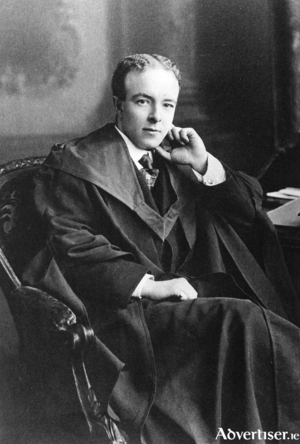
Nicholas Arthur Colohan was born in Enniskillen on August 12th 1884 to Nicholas Whistler and Lizzie Colohan. The family moved to The Villa opposite the Crescent in Galway. He may have been tutored at home as his family were reasonably wealthy. There are no records of him attending either the Presentation or the Jesuit primary schools. The earliest record of him in education relates to his first year in secondary education in the Bish. As a pupil, he was far from impressive and this prompted his parents to send him to Mungret College Limerick as a boarder and there he finished his secondary education.
Galway hospitals
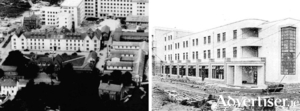
We know there was a hospital in High Middle Street in 1509, though it was probably a poorhouse in reality. In 1542, the Corporation built St Bridget’s Hospital on Bohermore. It subsequently served as a Leper Hospital. The 1651 map of Galway shows four hospitals. In 1820, a fever hospital opened on Earl’s Island, and in 1824, a small lying-in hospital was established on Mill Street at Madeira Island. The County Infirmary opened on Prospect Hill in June 1802.
Sixth class, The Mercy, 1948
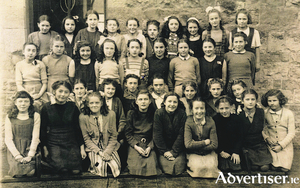
One hundred and eighty years ago, the Sisters of Mercy came to Galway for the first time, to a house in Lombard Street, to devote themselves to works of mercy among the poor. The great Catherine McAuley was one of the first three nuns to come here, the others being Mother M Teresa White and Mother N Catherine Leahy.
Waterside, c1885
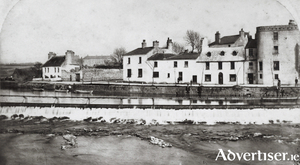
Some 100 years before this photograph was taken, most of the area we are looking at would have been under water, the river covered much of what is Woodquay today. Most of the people who lived in the area would have been small farmers or fishermen, their houses (outside the city walls) made of blocks of stone, often with moss stuffed into the crevices and a roof covered partly with straw, partly with turf. The river provided a rich source of food, though in the city, the fishery, from the Salmon Weir to the sea, was privately owned.